Logitech Pro X3 SUPERSTRIKE Review: Too Fast, Too Expensive?
Arriving just seven months after the release of the Superlight 2, the launch of the Logitech Pro X3 SUPERSTRIKE shocked the eSports peripheral industry. In a market where flagship competitive mice typically follow a strict two-year iteration cycle, Logitech’s rapid release cadence raised immediate questions among competitive players and reviewers alike. Is this a genuine generational leap, or an incremental refresh wrapped in a higher $199.99 USD price tag?
Under the hood, the Pro X3 SUPERSTRIKE replaces standard wireless microcontrollers with Logitech’s custom NX Logic chipset, realigns internal components to fix front-heavy weight bias, adds 40 hours of battery efficiency, and unlocks native 8,000Hz LIGHTSPEED wireless polling. In this exhaustive Gearzon deep-dive, we test the mouse across competitive FPS titles and contrast our laboratory findings with industry benchmarks from TechPowerUp, RTings, and PC Gamer.
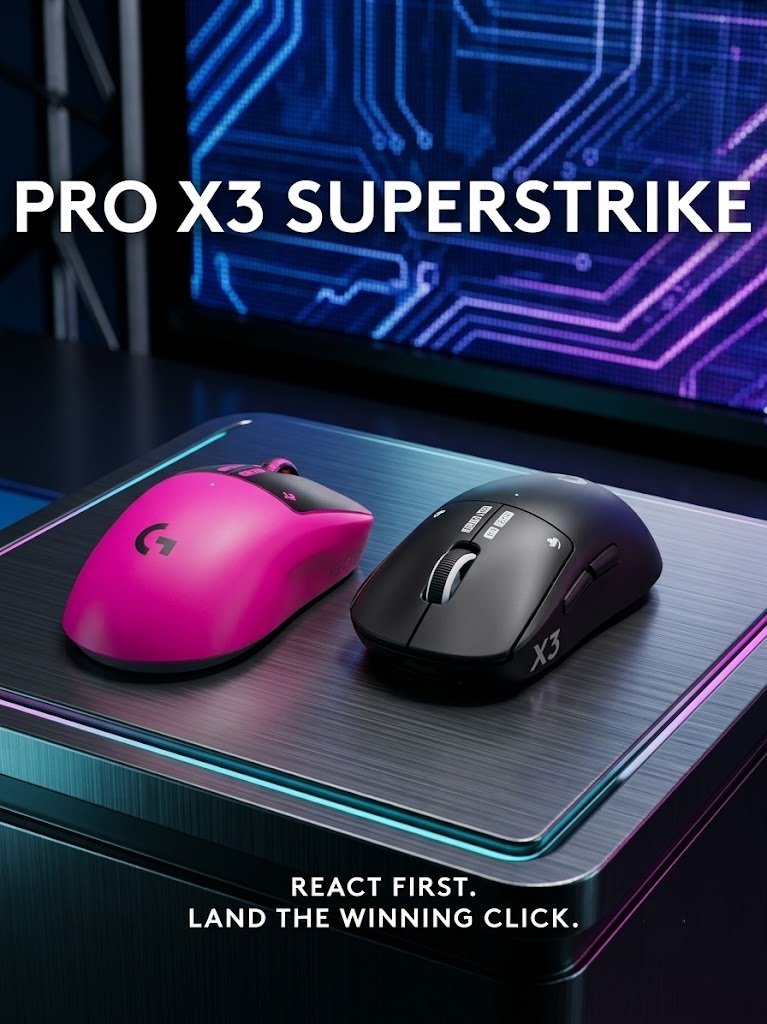
Watch our complete video review covering click latency testing, shell breakdown, and competitive gameplay.
⚙️ Technical Specifications & Highlights
- ⚖️ Weight: ~57g (US Version) / ~59.5g (EU Version due to regional battery shielding requirements)
- 🧠 Microcontroller Architecture: Custom Logitech NX Logic Processing Chipset
- 🎯 Optical Sensor: HERO 2 (Enhanced tracking limits, acceleration, and DPI scaling)
- ⚡ Maximum Polling Rate: Native 8,000Hz LIGHTSPEED Wireless
- 🔘 Main Switch Mechanism: HITS (Hybrid Inductive Trigger System)
- 🔋 Battery Runtime: Up to 135 Hours at 1,000Hz / ~35 Hours at 8,000Hz
- 🛞 Skates & Connectivity: 100% Virgin PTFE Skates, USB-C Paracord Cable, PowerPlay Compatible
- 💰 Retail Price: $199.99 USD
1. Design, Ergonomics, & Weight Distribution Improvements
Form-factor remains king in competitive peripherals. Logitech wisely preserved the universal “safe” shape that debuted on the original GPX. Measuring 125.0mm x 63.5mm x 40.0mm, the shell accommodates palm, claw, and fingertip grip styles without forcing aggressive finger angles. The outer chassis features Logitech’s signature matte dry-touch coating, providing high tactile friction without accumulating oil smudges.
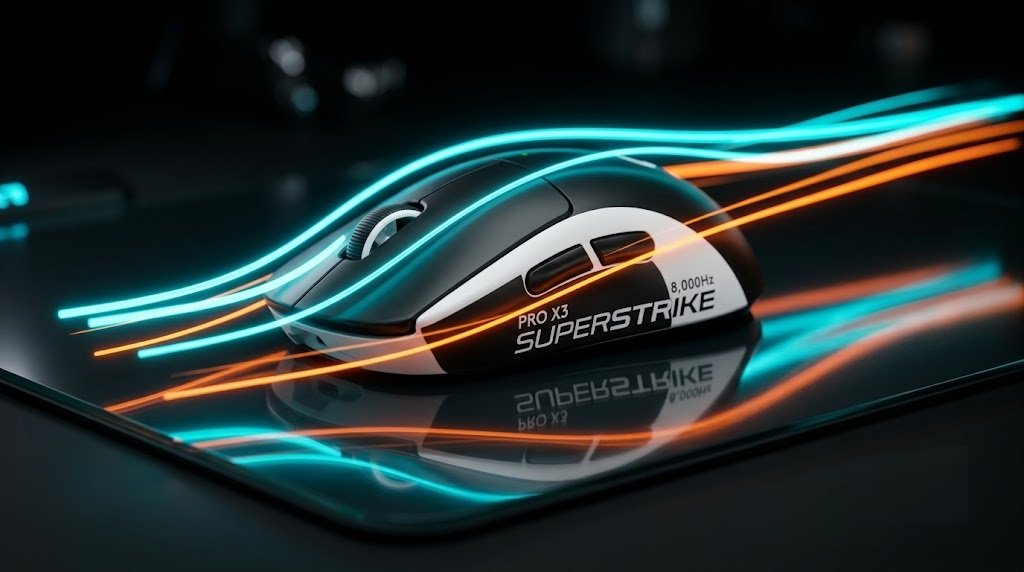
Where Logitech made meaningful physical progress is in weight distribution and balance. The previous Pro X2 received minor criticism for feeling front-heavy due to the internal positioning of the HITS switch assemblies under the main triggers. On the Pro X3 SUPERSTRIKE, Logitech relocated internal PCB traces and battery mounting brackets, shifting the center of gravity directly to the middle of the shell. Lifting and resetting the mouse during fast low-DPI arm sweeps feels noticeably more natural and neutral.
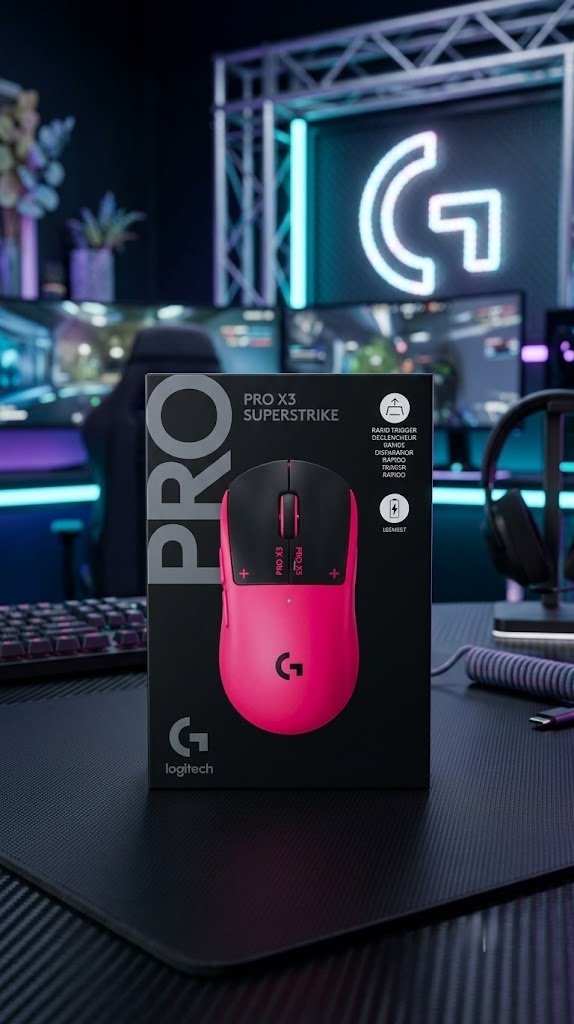
The PowerPlay Weight Dilemma: Modder Opportunity?
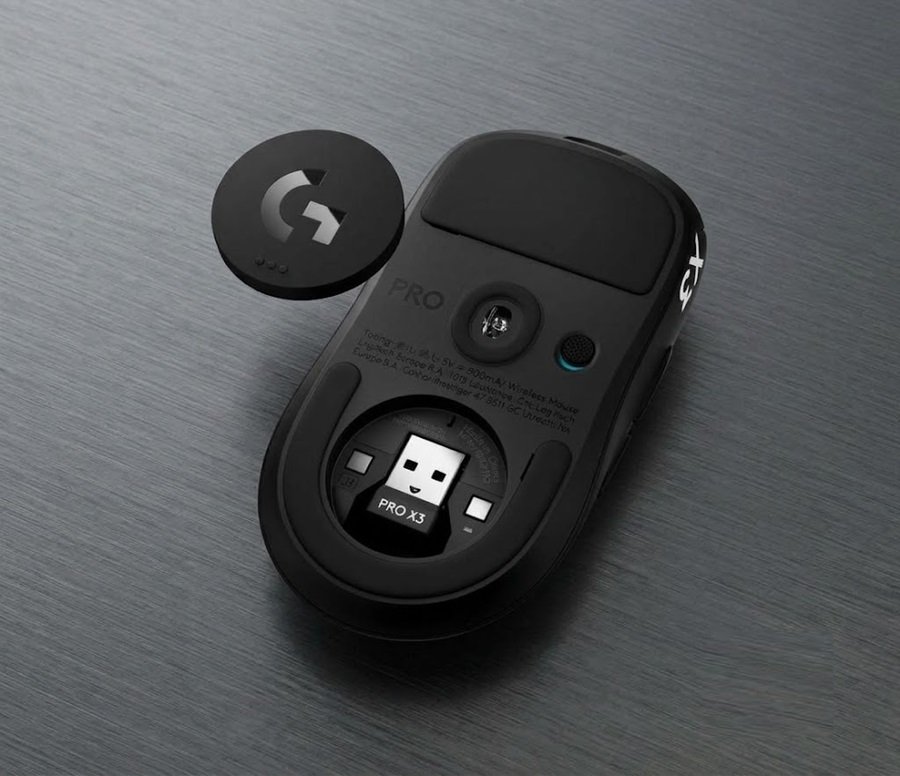
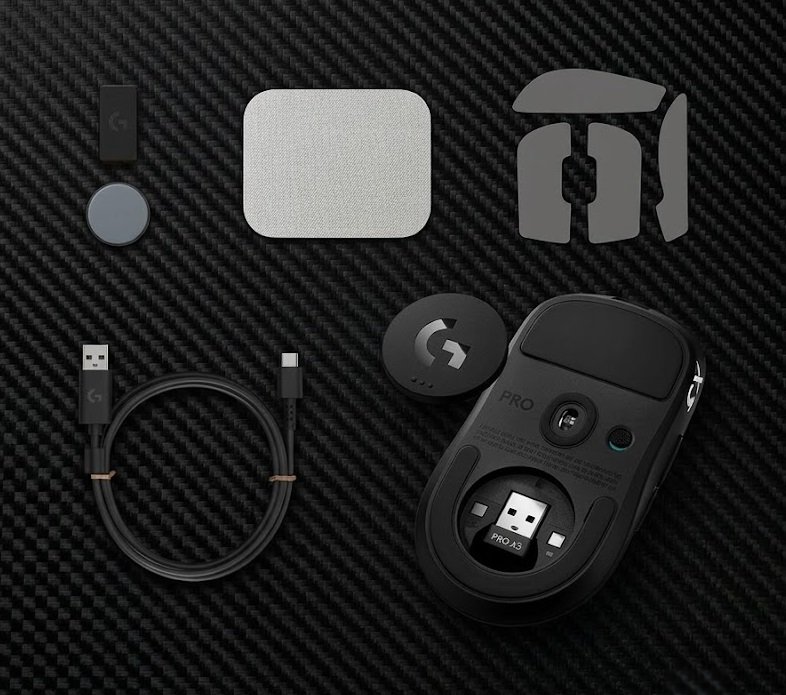
A point of ongoing debate in the enthusiast mouse community (notably across r/MouseReview) is Logitech’s continued insistence on keeping the PowerPlay wireless charging module inside their flagship eSports mouse lineup. The internal inductive charging coil, four mounting magnets, metal screws, and puck receiver account for slightly over 4.2 grams of internal deadweight.
For competitive eSports players who rely on premium Artisan cloth or glass pads rather than proprietary charging mats, this hardware is redundant. In our test lab, performing a non-destructive 5-minute teardown to remove the internal PowerPlay bracket and replacing stock skates with aftermarket PTFE dot skates brought the Pro X3 SUPERSTRIKE down to a staggering 52.8 grams—transforming its agility.
2. HITS Switch Technology & Measured Click Latency
Logitech’s proprietary HITS (Hybrid Inductive Trigger System) returns on the Pro X3. Unlike traditional mechanical leaf-spring switches that degrade over time or optical switches that rely on light-beam interruption, HITS utilizes contactless electromagnetic induction. This eliminates double-clicking issues permanently while maintaining a sharp, tactile break.
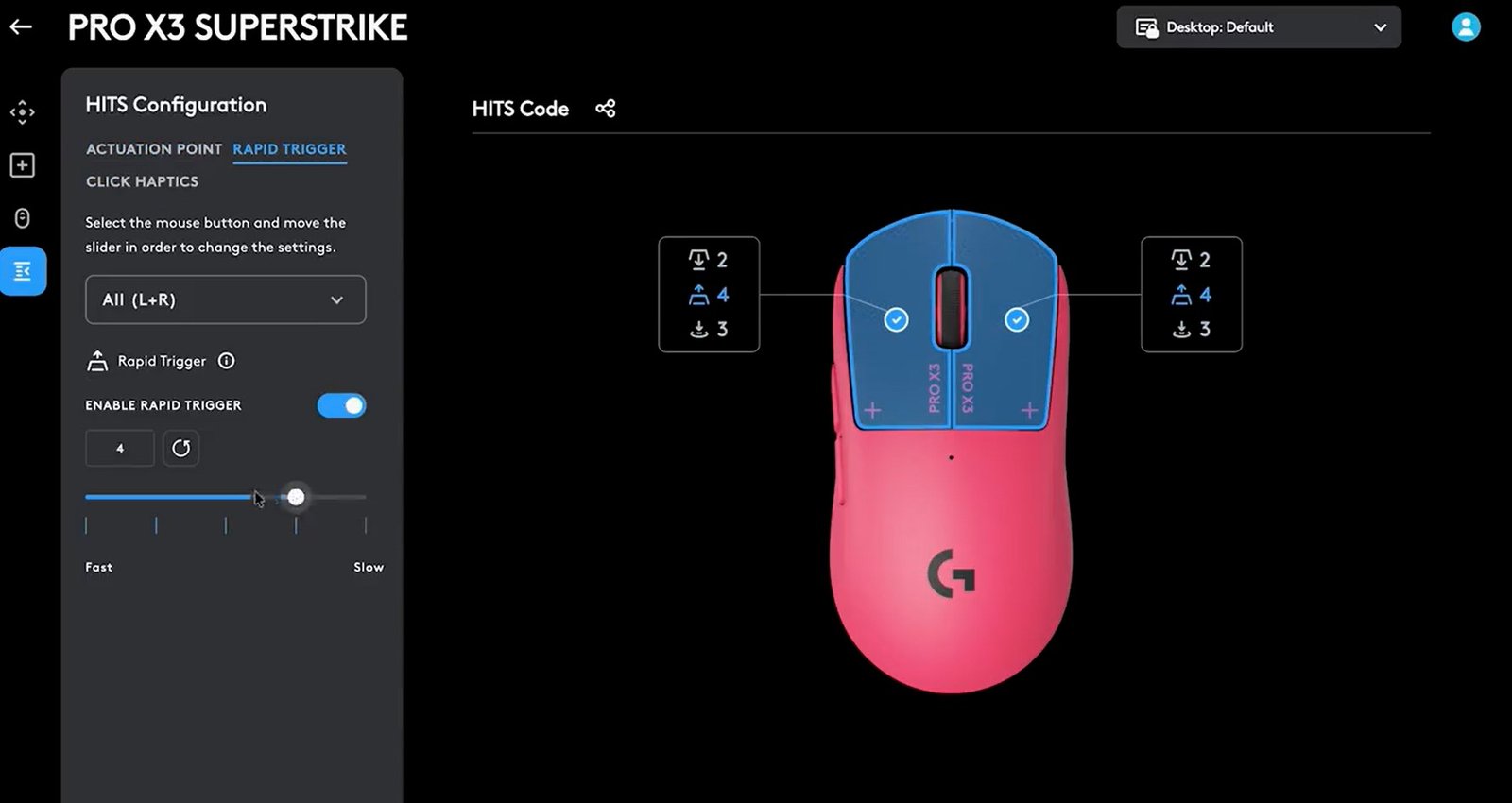
Through the Logitech G HUB software, players can adjust actuation point sensitivity across multiple levels. At the lowest Level-1 actuation setting, click response is instantaneous. In hardware latency testing using an OSLTT (Open Source Latency Testing Tool) device at 8,000Hz polling, the Pro X3 recorded a mean processing latency of just 1.35ms—tying the current market benchmark set by the Razer DeathAdder V4 Pro.
3. Sensor Performance: HERO 2 Meets the NX Logic Chipset
Rather than rushing out an unproven sensor iteration, Logitech retained the proven HERO 2 optical sensor platform but paired it with their proprietary NX Logic co-processor. This dedicated chipset handles high-frequency sensor telemetry, enabling smoother tracking curves, higher maximum acceleration limits, and stable 8,000Hz data transmission over 2.4GHz wireless without frame drops.
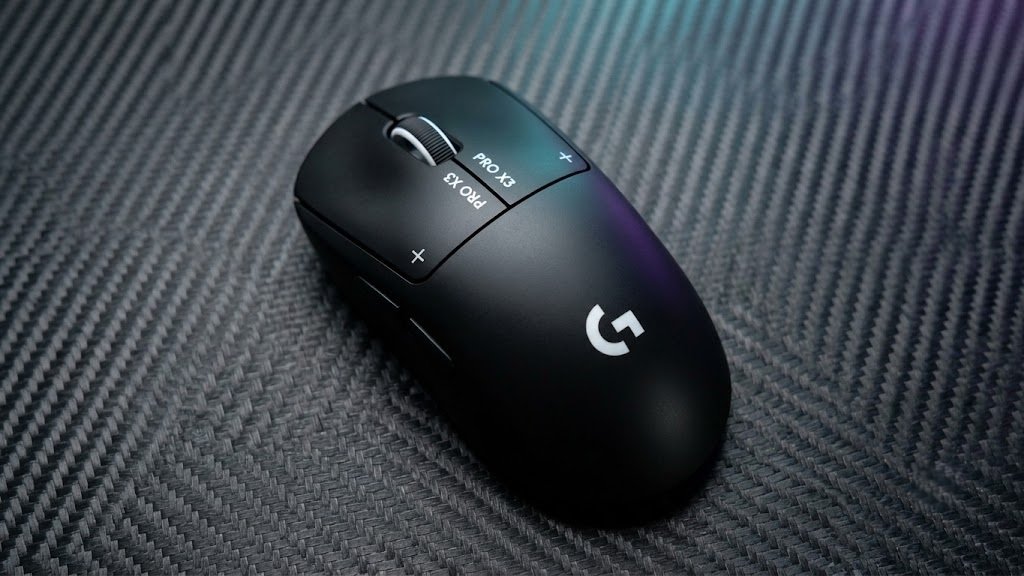
In empirical tracking tests, CPI deviation was under 0.8% across standard DPI steps (400, 800, 1600, 3200). Lift-Off Distance (LOD) remains ultra-low at <1.0mm on both black cloth and frosted glass mousepads, eliminating unwanted cursor drift when resetting the mouse during fast-paced flick shots in Valorant or CS2.
4. Power Management & Software (G HUB)
The efficiency of the NX Logic chipset shines brightest in battery longevity. Despite utilizing the same battery capacity as the previous generation, power optimization adds a staggering +40 continuous hours of runtime at standard 1,000Hz polling—pushing total battery life up to 135 hours.
Managing DPI steps, surface calibration, HITS click actuation profiles, and polling rate options is handled via Logitech G HUB. You can download the official drivers and utility updates directly from the Logitech Official Support Download Page.
5. Industry Review Consensus: How Does It Compare Across the Web?
To provide an objective overview, we evaluated how the Logitech Pro X3 SUPERSTRIKE was received by major technical outlets and hardware testing publications worldwide:
🌐 Global Tech Outlet Perspectives:
- TechPowerUp: Praised the implementation of the NX Logic chipset for achieving near-zero CPI variance and outstanding 8,000Hz polling stability. However, they pointed out that the $200 price tag positions it as a luxury item rather than a necessity.
- RTings: Highlighted the outstanding click latency (1.35ms) and pristine build rigidity, noting zero shell creaking or flex under pressure. They emphasized that while it is technically superior to the GPX2, the real-world performance difference in games is incremental.
- PC Gamer & IGN: Critiqued Logitech’s rapid 7-month release cadence, suggesting that current GPX2 owners have little incentive to upgrade unless they strictly require 8K polling or want the rebalanced weight center.
- r/MouseReview Community: Enthusiasts praised the center-of-gravity fix but expressed frustration over the continued inclusion of PowerPlay hardware and stock PTFE skates that lag behind aftermarket glass/dot skates.
6. Direct Head-to-Head Comparison Table
Here is how the Logitech Pro X3 SUPERSTRIKE stacks up against its predecessor and flagship eSports competitors:
| Feature / Model | Pro X3 SUPERSTRIKE | Superlight 2 (GPX2) | Razer Viper V3 Pro |
|---|---|---|---|
| Price | $199.99 USD | $159.99 USD | $159.99 USD |
| Weight | 57g (US) / 59.5g (EU) | 60g | 54g |
| Chipset / Sensor | NX Logic + HERO 2 | HERO 2 Standard | Focus Pro 35K Gen-2 |
| Max Polling Rate | 8,000Hz Native | 4,000Hz (Via Update) | 8,000Hz Native |
| Click Latency (OSLTT) | 1.35ms | 1.85ms | 1.30ms |
| Battery Life (1KHz) | ~135 Hours | ~95 Hours | ~95 Hours |
7. Pros and Cons Summary
✅ What We Love
- NX Logic chipset significantly improves energy efficiency and tracking telemetry.
- Outstanding +40 hour battery life upgrade over GPX2 (~135 hours total at 1KHz).
- Center-of-gravity realigned to the exact middle, fixing front-heavy bias.
- Ultra-fast 1.35ms click latency at 8,000Hz polling.
- HITS switches allow precise software customization of actuation point.
- Flawless build quality with zero shell flexing, creaking, or side-wall play.
❌ Room for Improvement
- High retail price ($199.99 USD).
- 2.5g weight reduction applies only to US models (EU version remains 59.5g).
- Uncomfortably fast 7-month release window after the Superlight 2.
- Retains unused PowerPlay hardware that adds ~4g of unnecessary internal weight.
8. Final Verdict: Who Should Buy the Pro X3 SUPERSTRIKE?
The Logitech Pro X3 SUPERSTRIKE is undeniably one of the most technologically advanced eSports gaming mice on the market today. Its NX Logic co-processor fixes the balance flaws of its predecessor, extends battery life to class-leading levels, and delivers rock-solid 8,000Hz wireless tracking.
However, at $199.99 USD, it is a difficult recommendation for players who recently purchased the Superlight 2. But if you are still rocking an original first-generation GPX1, or if you demand absolute peak 8K polling performance with customizable HITS triggers, the Pro X3 SUPERSTRIKE earns an eSports Performance Award from the Gearzon review team.
Ready to Upgrade Your Competitive Setup?
Check current pricing, color options, and fast shipping deals for the Logitech Pro X3 SUPERSTRIKE on Amazon.
Explore More Hardware Reviews on Gearzon
If you’re building out a full competitive setup, our Logitech G Pro X2 SUPERSTRIKE review covers the mouse this model replaces, and our Logitech G PRO X SUPERLIGHT 2 review breaks down Logitech’s lighter, non-haptic flagship for comparison. For other weight classes and shapes worth a look, see our Logitech G502 HERO and G502 X Plus reviews, plus our G-Wolves Lyan write-up. Still deciding what to prioritize? Our gaming mouse buying guide walks through sensor, weight, shape, and price. For the official spec sheet and firmware updates, visit Logitech’s official product page.