For years, Razer has maintained an iron grip on the competitive ultra-lightweight eSports mouse segment. The Razer DeathAdder V3 Pro and Viper V3 Pro have served as default recommendations for pros and enthusiasts alike. However, SteelSeries has launched a massive counteroffensive with their newly engineered Rival (Ergonomic) and Sensei (Ambidextrous) flagships.
Retailing at $180, SteelSeries introduces a game-changing feature to sub-55g mice: an uninterrupted hot-swappable battery system that eliminates charging cables forever without ruining center-of-gravity balance. In this exhaustive Gearzon head-to-head review, we test shell flex under 15 lbs of mechanical pressure, analyze thermal heat-signature camera captures, evaluate optical switch acoustics, and compare 8,000Hz sensor telemetry.
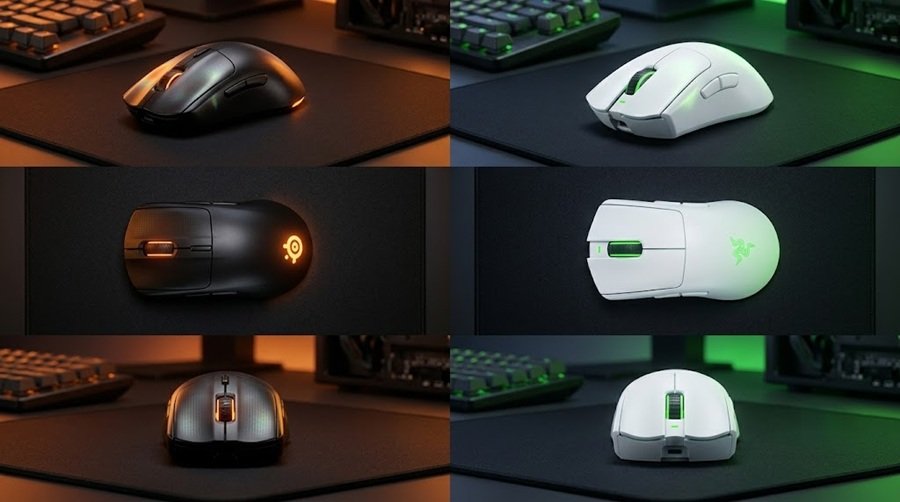
Watch our complete comparison video featuring digital caliper measurements, pressure gauge flex tests, and sound profile recording.
1. Master Comparison Matrix
Before diving into empirical laboratory testing, here is how all four contenders compare across core technical metrics:
| Metric / Spec | SteelSeries Rival | Razer DeathAdder V3 Pro | SteelSeries Sensei | Razer Viper V3 Pro |
|---|---|---|---|---|
| Shape Category | Ergonomic (Right) | Ergonomic (Right) | Symmetrical (Ambi) | Symmetrical (Ambi) |
| Measured Weight | 53.2g | 57.4g | 53.0g | 49.7g |
| Length (Caliper) | 124.5 mm | 125.0 mm | 125.2 mm | 127.1 mm |
| Grip Width (Sensor) | 59.0 mm | 61.0 mm | 59.0 mm | 59.0 mm |
| Rear Flare Width | 68.0 mm | 65.0 mm | 66.0 mm | 63.0 mm |
| Peak Hump Height | 42.0 mm | 42.0 mm | 38.8 mm | 39.0 mm |
| Power System | Hot-Swap Battery | USB-C Fast Charge | Hot-Swap Battery | USB-C Fast Charge |
| Switch Type | Pre-tuned Optical | Razer Gen-3 Optical | Pre-tuned Optical | Razer Gen-3 Optical |
| Max Wireless Polling | 8,000Hz Native | 8,000Hz (Dongle) | 8,000Hz Native | 8,000Hz Native |
| MSRP Price | $179.99 USD | $159.99 USD | $179.99 USD | $159.99 USD |
2. Ergonomics & Shape Breakdown: Caliper & Thermal Camera Tests
While manufacturer dimensions on product boxes give a general impression, real-world feel depends on sensor-to-thumb placement and flare curves. Using digital calipers alongside a thermal heat-signature camera, we mapped hand contact and weight distribution across all four mice.
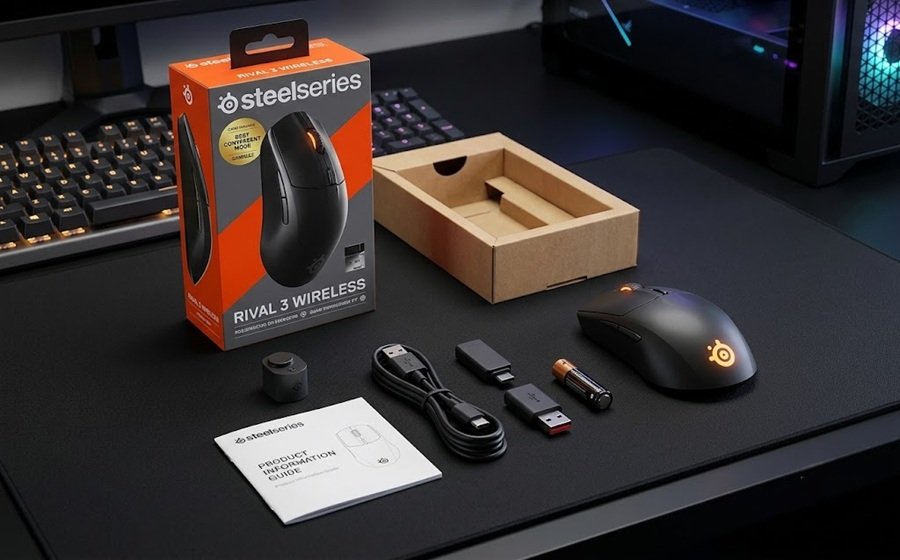
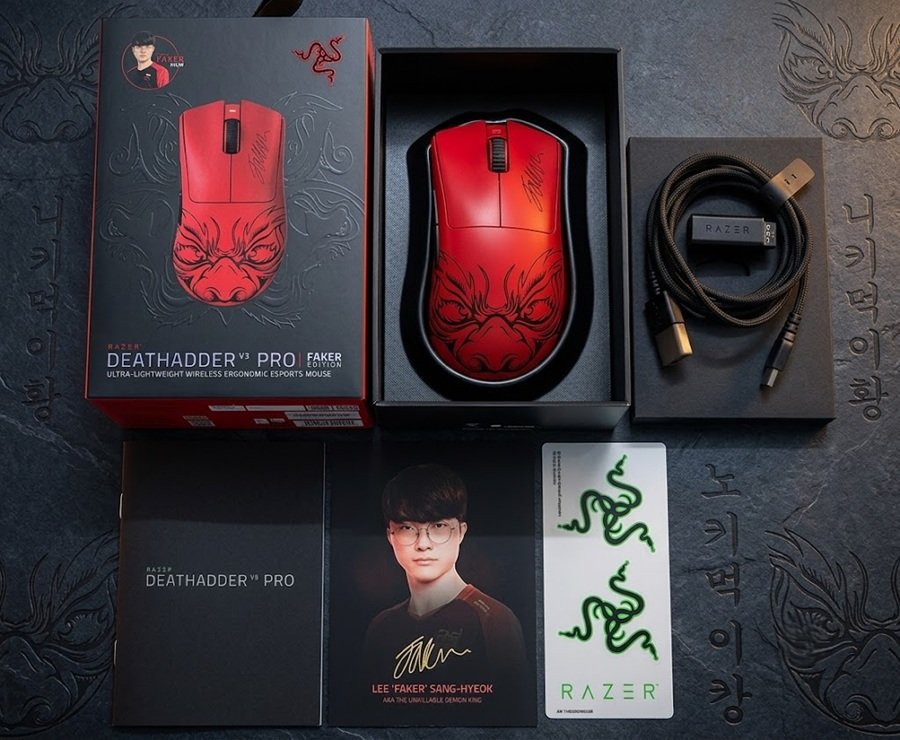
Rival vs. DeathAdder V3 Pro (Ergonomic Category)
The Razer DeathAdder V3 Pro is a wide, hand-filling mouse. At 61mm across the sensor midpoint and 65mm across the front flare, thermal imaging reveals full, saturated heat transfer across the entire palm pad and knuckle base. It locks your hand into a stable position—ideal for low-sensitivity arm aimers in titles like Counter-Strike 2 or Rainbow Six Siege.
By contrast, the SteelSeries Rival narrows to 59mm at the grip point with a tighter front flare. Thermal captures show heat transfer concentrated at the finger pads and upper palm base, leaving the center of the palm slightly open. This allows claw and hybrid aimers to pull the mouse backward into their palm for vertical recoil compensation or fast flicking in arena shooters.
Sensei vs. Viper V3 Pro (Ambidextrous Category)
For symmetrical aimers, the SteelSeries Sensei and Razer Viper V3 Pro share an identical 59mm sensor grip width and ~39mm peak hump height. However, their rear contours differ significantly. The Sensei expands to a 66mm rear flare, creating a pronounced lower-palm anchor point. Thermal imaging confirms heat transfer focused along the back corners of the palm, giving claw aimers a stable pivot point.
The Viper V3 Pro features a flatter 63mm tail that slopes downward smoothly. Heat distribution on the Viper shows minimal palm contact, making it a pure fingertip or aggressive claw mouse that glides with virtually zero resistance.
3. The Hot-Swappable Battery Revolution
The flagship innovation of the new SteelSeries lineup is their hot-swappable battery compartment housed under the rear magnetic shell door. Historically, wireless mice with battery compartments suffered from significant rearward weight bias and heavy overall weight (e.g., older battery-powered mice weighing 80g+).
SteelSeries achieved an engineering feat here: at 53.2g for the Rival and 53.0g for the Sensei, these mice undercut the DeathAdder V3 Pro (57.4g) while containing a swappable battery cell. During fast horizontal swipes, the center of gravity sits dead-center over the optical sensor. Swapping batteries takes under 5 seconds, allowing you to play wirelessly indefinitely without ever plugging a USB cable into your mouse during a tournament match.
4. Build Quality: The 15-Pound Pressure Gauge Test
To evaluate structural rigidity, we applied up to 15 lbs of localized mechanical force across the top shell, side walls, and bottom plates of all four mice using a digital pressure gauge.
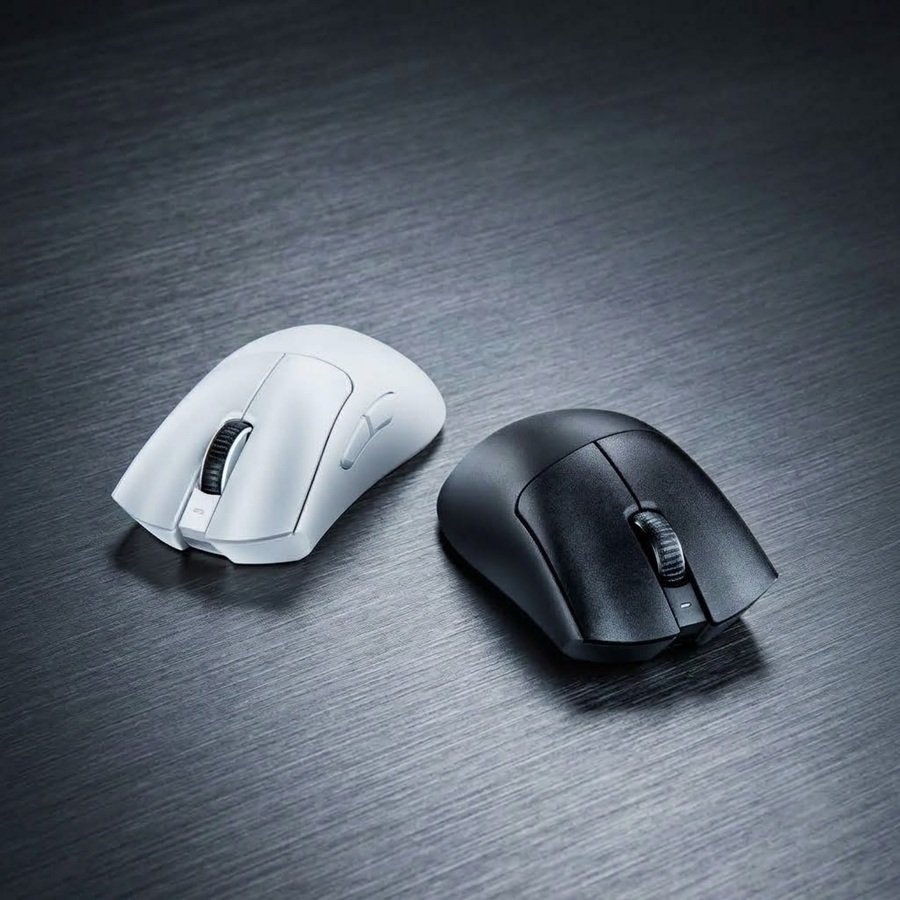
Despite their low weights, all four mice passed with flying colors. We recorded zero side-wall flexing, zero creaking, and zero pre-actuation of side buttons under maximum force. Furthermore, applying 12 lbs of direct force onto the removable battery door of the SteelSeries mice produced zero creaking or movement, proving that internal latch tolerances are tight and durable.
5. Optical Switches & Acoustic Audio Profiles
Both manufacturers utilize optical switches to eliminate mechanical double-clicking and reduce debounce latency to near-zero levels. However, their switch acoustic signatures and tactility differ noticeably:
- Razer Optical Gen-3 Switches: Produce a sharp, high-pitched, crisp click sound. They feature immediate actuation with very light pre-travel and high tactile reset feedback.
- SteelSeries Custom Optical Switches: Offer a deeper, lower-pitched “thocky” sound profile. The main buttons feel slightly more dampened and substantial underfoot, while their side buttons deliver a crisper click than Razer’s side inputs.
6. Software Ecosystems: SteelSeries GG vs. Razer Synapse
Managing DPI stages, lift-off distances (LOD), angle snapping, and 8,000Hz polling rate modes requires vendor software. Both applications offer deep customization, though they differ in resource overhead and interface design:
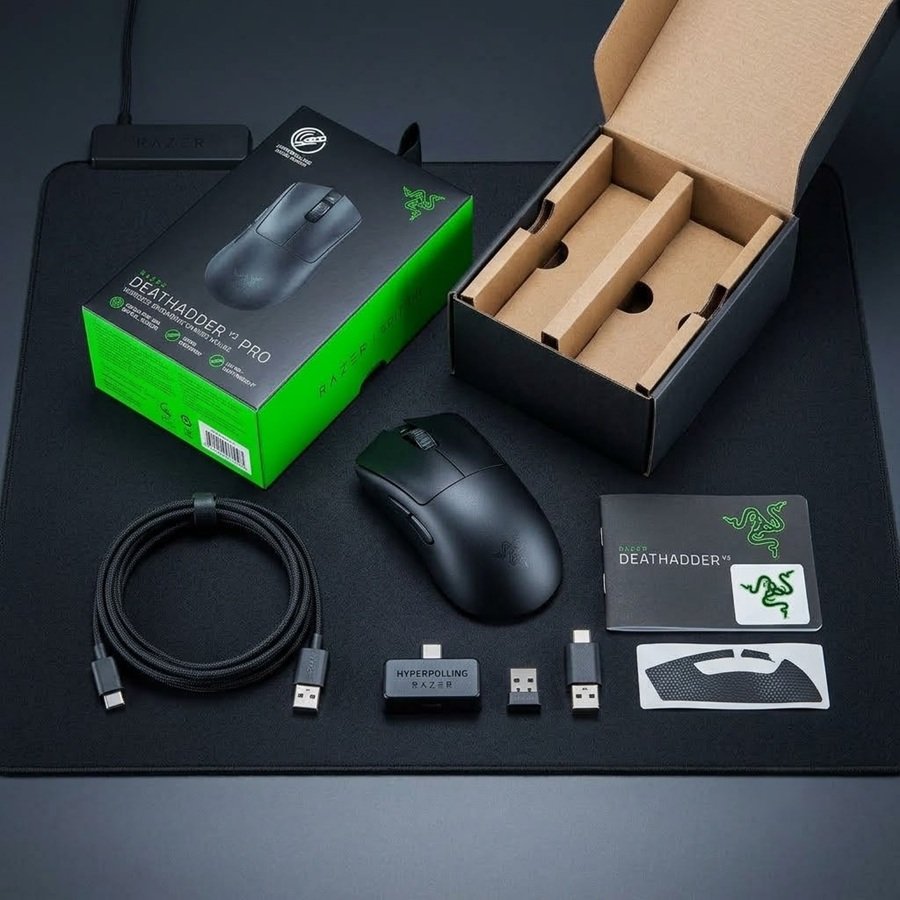
💻 Software Downloads & Features:
- SteelSeries GG Engine: Lightweight utility for configuring dual-polling modes (separating switch debouncing from sensor polling rates) and managing battery swap telemetry. You can download the latest drivers directly from the Official SteelSeries Engine Download Page.
- Razer Synapse: Feature-packed software suite offering advanced HyperPolling dongle synchronization, surface calibration, and Razer Chroma ecosystem integration. You can download the setup utility directly from the Official Razer Software Download Page.
7. Pros and Cons Breakdown
👍 SteelSeries (Rival & Sensei)
- Revolutionary hot-swappable battery system eliminates charging cables forever.
- Impeccable 53g weight balance with zero rearward battery tilt.
- Deeper, more satisfying optical click acoustics.
- Rival’s narrower grip width enables faster micro-adjustments for hybrid aimers.
- Flawless structural rigidity under 15 lbs of force.
👍 Razer (DeathAdder & Viper V3 Pro)
- Slightly lower price point ($159.99 vs SteelSeries’ $179.99).
- The Viper V3 Pro is the absolute lightest contender (sub-50g at 49.7g).
- Matte white finish options resist oil buildup and finger smudges exceptionally well.
- DeathAdder V3 Pro provides unmatched palm-filling stability for traditional ergo lovers.
8. Final Buying Advice: Which Mouse Belongs on Your Desk?
Choosing between these eSports titans comes down to your preferred grip style and charging preference:
- Buy the Razer DeathAdder V3 Pro if you want a large, palm-filling ergonomic shell that locks your hand into place for low-DPI tactical shooters.
- Buy the Razer Viper V3 Pro if your sole priority is achieving the absolute lowest weight possible (49.7g) for pure fingertip or aggressive claw aiming.
- Buy the SteelSeries Rival or Sensei if you want top-tier 8K performance combined with the massive quality-of-life convenience of a hot-swappable battery. Never having to plug a USB cable into your mouse mid-game is worth the $20 premium.
Ready to Upgrade Your Gaming Setup?
Check current pricing, stock availability, and special discounts for both lineups on Amazon.
Explore More Hardware Reviews on Gearzon
Looking for in-depth technical breakdowns on ultra-lightweight mice, magnetic keyboards, and OLED gaming monitors? Visit Gearzon for expert peripheral reviews!