Do Blue Light Glasses Work? Gunnar Intercept Review and What the Evidence Says
Blue light glasses are everywhere in gaming. Brands promise less eye strain, better sleep and even protection for your retina. Yet the research is far less enthusiastic than the marketing. This guide separates what the evidence supports from what the ads imply, then reviews the Gunnar Intercept, one of the best-known gaming glasses.
Short version: the best studies find no clear short-term benefit for eye strain, and eye doctors do not recommend special glasses for screen use. Many gamers still like their Gunnar pairs for comfort, glare and style. We explain both sides so you can decide without paying for a claim the science does not back.
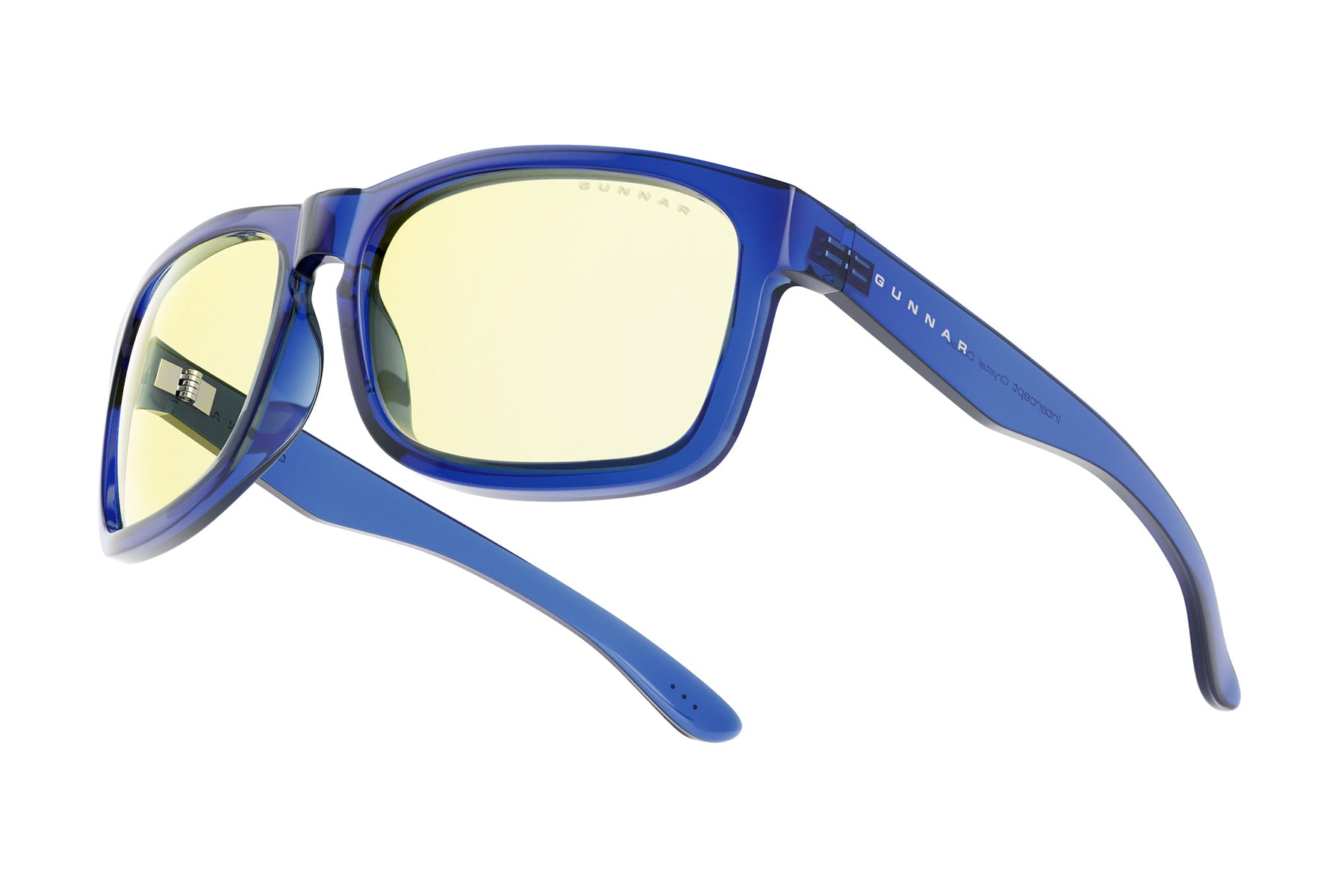
🕶️ Gunnar Intercept: Quick Specifications
👍 The Good
- ✔ Lightweight 33 g frame and flat arms that sit under a headset
- ✔ Five lens tints, from clear to 98% blue light blocking
- ✔ Prescription lenses available
- ✔ Reviewers report less fatigue and glare
👎 The Bad
- ✘ No strong evidence that blue light filtering reduces eye strain
- ✘ Amber tint shifts colors, so it is poor for color work
- ✘ Prescription versions add a lot of cost
- ✘ Reviews we found are mostly supplied units and are subjective
- ✘ Some health claims on product pages go beyond the evidence
Do Blue Light Glasses Work? The Short Answer
For eye strain, the evidence says probably not, at least not because of the blue light filter. For protecting your eyes from screen light, there is no scientific evidence that screens damage them. For sleep, the results are unclear. For comfort, tinted lenses may help some people feel better, but that is not the same as a proven medical benefit.
| Claim | What the evidence says | Confidence |
|---|---|---|
| Reduces digital eye strain | May make no short-term difference (Cochrane) | Low certainty |
| Protects the retina from screens | No scientific evidence of screen damage (AAO) | Expert position |
| Improves sleep | Unclear results across six trials | Very low certainty |
| Improves visual acuity | Probably little or no effect | Moderate certainty |
| Feels more comfortable | Some reviewers report it; not measured in trials | Anecdotal |
What the Research Says About Blue Light Glasses
The 2023 Cochrane Review
The strongest evidence comes from a Cochrane review published in August 2023. It pooled 17 randomised trials with 619 participants from six countries. The authors found that blue-light filtering lenses may not reduce short-term eye strain compared with ordinary lenses, although the certainty of that finding is low.
The review also found little to no difference in flicker sensitivity and probably little or no effect on visual acuity. Sleep results were mixed. Three of six trials reported better sleep scores and three found no clear difference, and the authors rated that evidence as very low certainty. No included study measured macular health, so the review cannot say whether the lenses protect the retina.
Quality matters too. No trial had a low risk of bias in every area. The authors call for better randomised trials, which means the question is not closed. It also means nobody can honestly promise that these lenses work.
What the American Academy of Ophthalmology Says
The American Academy of Ophthalmology states there is no scientific evidence that light from computer screens damages the eyes. It does not recommend special eyewear for computer use. It explains that eye strain comes from how people use screens, with reduced blinking during long sessions, rather than from something screens emit.
The Academy does note some evidence that blue light affects the body clock. Its advice for sleep is to avoid screens for two to three hours before bed and to use dark or night mode in the evening.
What UK Optometrists Say
The College of Optometrists summarised the Cochrane findings in September 2023. It said the lenses showed no better performance than non-filtering lenses for computer-related eye strain, and that sleep effects were inconclusive. It also told its members to be clear with patients that there is no strong evidence of benefit for visual performance, eye fatigue, sleep or macular health.
Video: eye doctor Joshua Cohen, MD, asks whether blue light glasses are a scam. Treat it as one more opinion alongside the sources above.
So Why Do Some People Feel Better?
Possible explanations include the following, though none is proven for any one person. A tint can reduce glare and brightness. Wearing glasses may remind you to take breaks. People who buy glasses for eye strain may also change other habits. Trials try to separate these effects, which is why reviewer anecdotes are not proof.
Gunnar Intercept Review: Design, Fit and Build
The Gunnar Intercept is a chunky wayfarer-style frame with a gaming-friendly look. Gunnar lists it at $69.99 on its store, at the Signature performance level. The listed colors are Crystal Cobalt, Onyx and Crystal. Pocket Gamer counts six colorways across the range and says some are vibrant while others blend into everyday wear.

Comfort and Weight
Weight is about 33 g according to Gaming Trend and CGMagazine. Both reviewed the Assassin’s Creed Mirage edition, which uses the Intercept frame at a higher $84.99 price. Gaming Trend lists a 58 mm lens width, 17 mm nose bridge, 133 mm frame and 135 mm arms.
Gaming Trend found the arms sit flat and stay put under a headset, with some discomfort from the arm ends during marathon headset sessions. CGMagazine praised the adjustable nose pads and curved temple tips after wearing them for hours. If you wear headphones, our HyperX Cloud III S Wireless review and Turtle Beach Stealth Pro 2 review cover fit and comfort in long sessions, which matters when you wear glasses. For more options, see our Arctis Nova 5X vs Cloud III S comparison and the Logitech G Pro X 3 Lightspeed review.
Lens Tints and Blue Light Percentages
Gunnar sells the Intercept with five tints and lists how much blue light each blocks at 450 nm. The numbers below come from the store page, and the descriptions quote its stated uses.

| Tint | Blue light blocked (450 nm) | Gunnar’s stated use |
|---|---|---|
| Clear Pro | 20% | For graphic arts and others who need accurate color |
| Clear | 35% | Not specified on the page |
| Amber | 65% | Not specified on the page |
| Sun | 90% | For outdoor digital device viewing |
| Amber Max | 98% | For extreme photosensitivity and sleep control |
Higher percentages mean a stronger orange tint. Reviewers noted that colors look dull and shifted toward red or orange at first, then the eyes adapt after a few days. CGMagazine warns against the amber tint for precise color work, so editors and artists should look at Clear Pro.
Software, Coatings and Prescription Options
There is no software. The lens choice is the only setting you control. Pocket Gamer reports an anti-reflective coating on all lenses, and Gaming Trend says the lenses are smudge-resistant, though not fully. Gunnar also sells prescription lenses. Gaming Trend lists $234.99 for single vision and $334.99 for progressive, and Gunnar states that prescription sales are final with no returns.
What Reviewers Say About the Gunnar Intercept
| Review | Score | What the reviewer reported | Unit supplied |
|---|---|---|---|
| Pocket Gamer | 5 out of 5 | Comfortable and may help reduce eye strain; no measurements given | Not stated |
| Gaming Trend (Mirage edition) | 100 (Phenomenal) | Less eye strain after an eight-hour work shift; pricey | Yes, sent by Gunnar |
| CGMagazine (Mirage edition) | 8 out of 10 | Less fatigue and headaches over weeks; colors dulled | Likely, Gunnar approached the reviewer |
All three reviews are subjective and none measured eye strain with a control. Two reviewers received units from Gunnar, and CGMagazine discloses affiliate links. That does not make the experiences false. It does mean they cannot overrule the controlled trials above. We read them as comfort reports rather than medical findings.
Video: KitGuru tests Gunnar glasses supplied by UK retailer OCUK, with a team member who has suffered from headaches and eye strain. It is a 2020 video, so treat it as anecdotal.
Which Gunnar Lens Should You Choose?
If you decide to buy, match the tint to how you use the screen. Do not pick the strongest tint by default, because a stronger tint changes colors more.
| Your situation | Sensible choice | Why |
|---|---|---|
| Mostly gaming and streaming at night | Amber (65%) | The tint both Mirage-edition reviews used |
| Daytime work with color-critical tasks | Clear Pro (20%) or Clear (35%) | Less color shift |
| Very sensitive to bright screens | Amber Max (98%) | Strong tint, strongest color shift |
| Need a prescription | Intercept with prescription lenses | Higher cost, final sale |
What Actually Helps Gaming Eye Strain
The American Academy of Ophthalmology recommends habits rather than glasses. These steps cost nothing and apply to every gamer.
| Habit | How to do it |
|---|---|
| Take breaks | Use the 20-20-20 rule: every 20 minutes look at something at least 20 feet away for 20 seconds |
| Set your distance | Sit about arm’s length (around 25 in) from the screen and look slightly downward |
| Blink and hydrate | Long sessions reduce blinking; use artificial tears if your eyes feel dry |
| Fix lighting and contrast | Reduce glare and adjust room lighting; a matte screen filter can help |
| Protect sleep | Avoid screens two to three hours before bed and use night mode in the evening |
| Rest from contact lenses | Wear glasses for a break if you use contacts |
Fix the Screen Before the Glasses
Your monitor matters more than any lens. Glare, brightness and distance all affect how tiring a session feels. Our OLED monitor comparison, the Alienware AW3426DW review and the ASUS TUF VG247Q1A review cover panels at different prices. Handheld players should read our ROG Xbox Ally X review and handheld buying guide, because small screens are held close to the face.
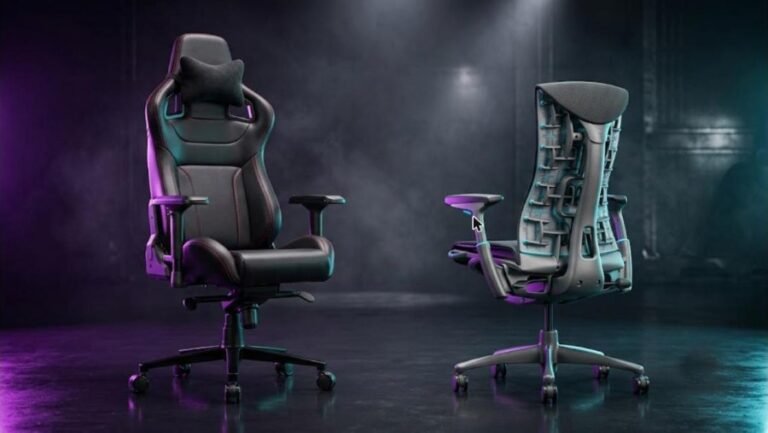
Posture also plays a role. A comfortable chair and a screen at the right height reduce neck and eye fatigue. See our Herman Miller x Logitech G Embody review for an example of a high-end ergonomic chair. If you still get headaches or blurry vision, book an eye exam, because uncorrected vision problems are a common cause of strain.
Who Should Buy the Gunnar Intercept?
| Buy it if | Skip it if |
|---|---|
| You like the look and want a comfortable, light frame for long sessions | You are buying purely to protect your retina from screens |
| You find bright screens or glare tiring and want a tint to try | You do color-critical work such as photo or video editing |
| You need prescription gaming lenses and accept the final-sale policy | You expect a medical cure for headaches or poor sleep |
| You can return or afford a pair as an experiment | You would rather spend the money on a better monitor or chair |
Gunnar backs the Intercept with a one-year warranty and a 30-day guarantee on the product page, though the selected variant showed as sold out when we looked. Check stock and the return terms before you order, and note that prescription lenses are final sale.
Our Verdict
Do blue light glasses work? The best available evidence says they probably do not reduce eye strain through blue light filtering, and eye doctors do not recommend them for screen use. The Gunnar Intercept is a well-reviewed, comfortable pair of glasses, and some people enjoy the tint. Buy it because you like the fit and glare reduction, not because of a medical promise.
We score it 7.0 out of 10 on comfort, options and value, with a deduction because the central health claim lacks strong support. Our rating is based on specs, reviews and medical sources.
Frequently Asked Questions
Do blue light glasses work?
Probably not for eye strain. A 2023 Cochrane review of 17 randomised trials found that blue-light filtering lenses may make no short-term difference to computer eye strain, and the American Academy of Ophthalmology does not recommend them for screen use.
Does blue light from screens damage your eyes?
The American Academy of Ophthalmology says there is no scientific evidence that light from computer screens damages the eyes. Eye strain comes mainly from how we use screens, such as blinking less and not taking breaks.
Do blue light glasses help you sleep?
The evidence is unclear. In the Cochrane review, three of six trials reported better sleep scores and three found no clear difference, and the certainty was very low. The Academy advises avoiding screens two to three hours before bed.
How much blue light does the Gunnar Intercept block?
Gunnar lists 20 percent for Clear Pro, 35 percent for Clear, 65 percent for Amber, 90 percent for Sun and 98 percent for Amber Max, measured at 450 nm.
How much does the Gunnar Intercept cost?
Gunnar lists the Intercept at $69.99. Special editions such as the Assassins Creed Mirage version were reviewed at $84.99, and prescription lenses add a lot more. Prices change, so check the Gunnar store.
Are Gunnar glasses good for gaming?
Reviewers describe them as light and comfortable under a headset, and some report less fatigue. Those reports are subjective and not proof of a medical benefit, so judge them as comfortable tinted glasses.
What is the best way to reduce eye strain from gaming?
Take regular breaks with the 20-20-20 rule, sit about arm length from the screen, blink often, control glare and lighting, and see an eye care professional if symptoms continue.
Can I use Gunnar glasses with a prescription?
Yes. Gunnar sells prescription lenses for the Intercept. Gaming Trend lists $234.99 for single vision and $334.99 for progressive lenses on a special edition, and Gunnar says prescription sales are final.