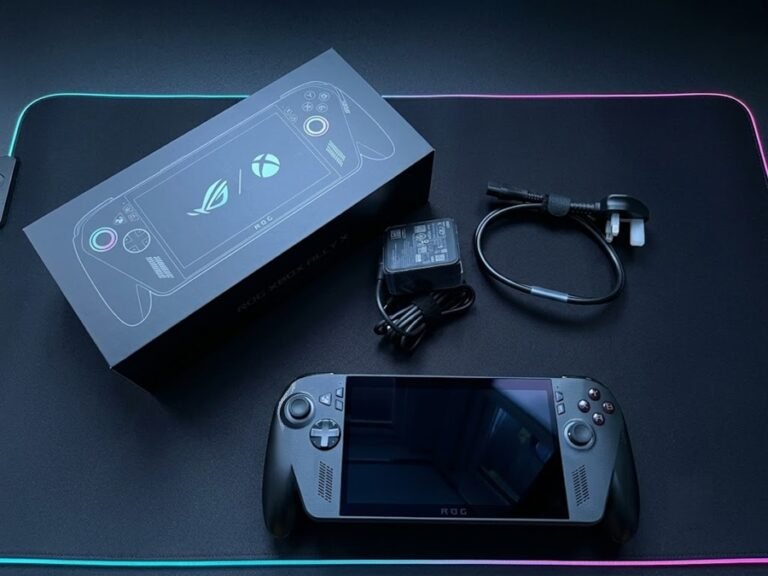
While Valve revolutionized portable PC gaming with the original Steam Deck, the handheld market in 2026 has exploded into a full-blown revolution. Today’s handheld gaming PCs pack incredible performance prowess, capable of cruising through demanding AAA titles like Cyberpunk 2077, Baldur’s Gate 3, and Crimson Desert wherever you go.
With hardware prices fluctuating due to memory market shifts, finding the right balance between performance, battery life, operating system ease-of-use, and price can be daunting. Welcome to Gearzon’s definitive guide to the four best handheld gaming PCs worth your hard-earned money in 2026.
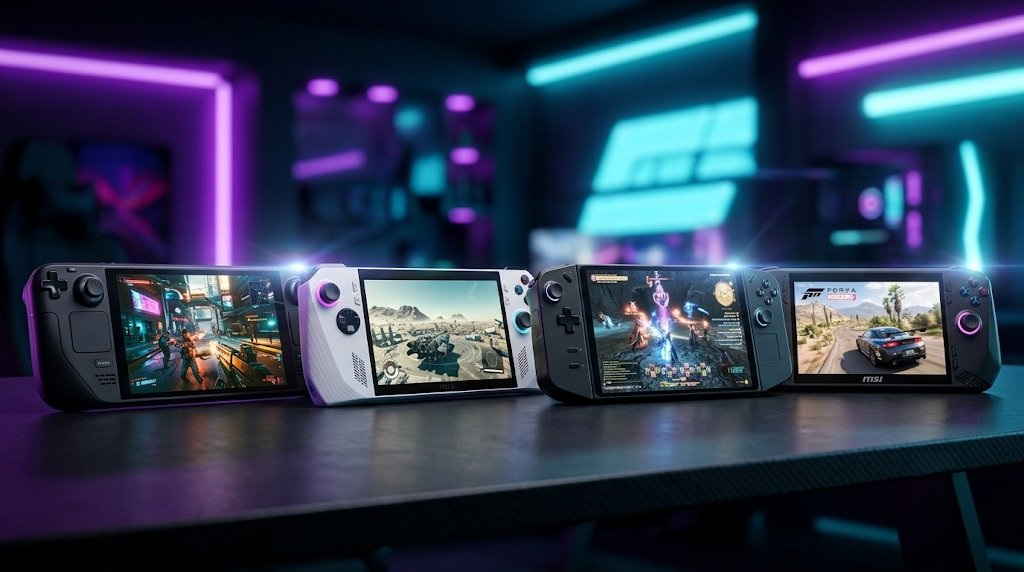
Watch the hands-on gameplay tests, FPS benchmarks, and side-by-side comparison.
⚙️ Top 4 Handheld PCs at a Glance
- 🏆 Best Overall: ASUS ROG Xbox Ally X ($999) — Z2 Extreme, Xbox Full-Screen UI, 80Wh Battery
- 🐧 Best SteamOS Pick: Lenovo Legion Go S — Z1 Extreme + SteamOS, 60 FPS in BG3, High-Res LCD
- ⚡ Ultimate Performance: MSI Claw 8 EX AI Plus ($1,799) — Intel Arc G3 Extreme, Panther Lake Architecture
- 💵 Best Budget Champion: ASUS ROG Ally Base (White) ($599) — Lightweight 1080p, Great for SteamOS/Batocera
How We Compared These Handhelds
Four factors shaped this ranking: performance, battery and weight, software, and price. We checked each device against the manufacturer’s spec sheet and against published reviews from outlets such as Notebookcheck, Tom’s Guide, TechRadar and HotHardware. Where reviewers disagree, we say so.
Prices are the hardest part. Handheld prices moved a lot in 2026 because of the memory market. Treat every figure in this guide as a launch or list price, and check the retailer before you buy. Availability matters as well. Lenovo’s UK page, for example, marks the SteamOS Legion Go S as end of life.
Specs at a Glance
| Handheld | Processor | Memory | Display | Battery | Weight | Price in this guide |
|---|---|---|---|---|---|---|
| ROG Xbox Ally X | Ryzen AI Z2 Extreme | 24GB LPDDR5X | 7-inch 1080p IPS, 120Hz | 80Wh | 715g | $999 |
| Lenovo Legion Go S (SteamOS) | Ryzen Z2 Go or up to Z1 Extreme | 16GB to 32GB | 8-inch 1920×1200 IPS, 120Hz | 55.5Wh | 740g and up | $649.99 launch (Z2 Go); $829.99 (Z1 Extreme) |
| MSI Claw 8 EX AI+ | Intel Arc G3 Extreme | 32GB LPDDR5x | 8-inch 1920×1200, 48-120Hz VRR | 80Wh | 1.73 lbs | $1,799 MSRP |
| ROG Ally (Z1 base model) | Ryzen Z1 | 16GB LPDDR5 | 7-inch 1080p IPS, 120Hz | 40Wh | 608g | $599 launch |
1. ASUS ROG Xbox Ally X ($999) – The Best Overall Handheld PC
Following a massive collaboration between Microsoft and ASUS, the ROG Xbox Ally X stands as the current flagship gold standard for handheld gaming PCs. Designed as a pilot run for a controller-friendly version of Windows 11, it boots directly into a full-screen Xbox dashboard interface.
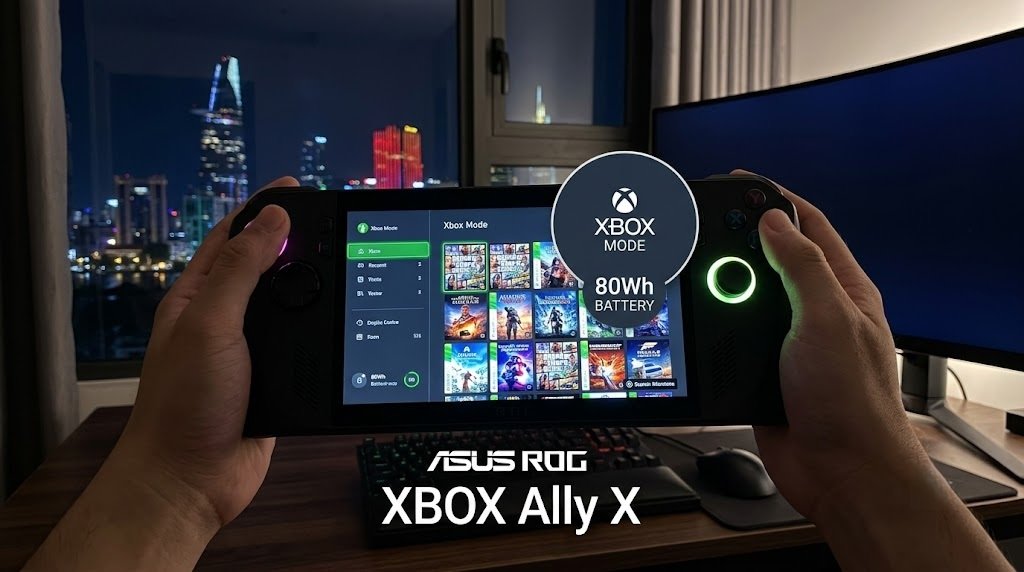
For gamers heavily invested in Xbox Game Pass, Steam, Epic Games Store, and GOG, you rarely ever need to navigate to a traditional Windows desktop. Powered by AMD’s Ryzen Z2 Extreme processor, the ROG Xbox Ally X easily hits up to 44 FPS in Cyberpunk 2077 at 1080p High settings, maintaining a stable 30 to 35 FPS even on battery power.
While its $999 price point is premium, its combination of an 80Wh battery, ergonomic grips, and streamlined software makes it the easiest recommendation for most gamers in 2026.
What Reviewers Found
Independent reviews support the “best overall” label. Notebookcheck scores the handheld 86% and praises its improved ergonomics, fast Zen 5 chip and good battery runtime. Tom’s Guide calls it the best PC gaming handheld. Our full ROG Xbox Ally X review adds a teardown and a look at the weaker non-X model.
The ASUS spec sheet lists 24GB of LPDDR5X memory, a 1TB PCIe 4.0 SSD, a 7-inch 1080p 120Hz screen and a 715g weight. A USB4 port with Thunderbolt 4 handles docks and monitors. Notebookcheck measured the screen at about 490 nits.
Battery life is good, not endless. Notebookcheck and Tom’s Guide both report a little over three hours of gaming in Performance mode.
Drawbacks to Know
Cost is the first problem. At $999, the Xbox Ally X costs far more than most rivals, and Tom’s Guide notes that you do not get an OLED screen for that money. Notebookcheck also lists thicker grips and loud fans in Turbo mode. Finally, the Xbox interface still does not match SteamOS for efficiency.
2. Lenovo Legion Go S (SteamOS Edition) – The Best SteamOS Alternative
Lenovo completely turned the tables with the updated Legion Go S. Replacing older, sluggish Windows configurations, Lenovo partnered with Valve to launch a version powered by SteamOS and the AMD Ryzen Z1 Extreme processor natively out of the box.
This SteamOS integration delivers a 9% performance uplift in synthetic benchmarks compared to Windows-based handhelds. In demanding titles like Baldur’s Gate 3, the Legion Go S delivers a smooth 60 FPS experience—a feat the original Steam Deck hardware simply cannot match.
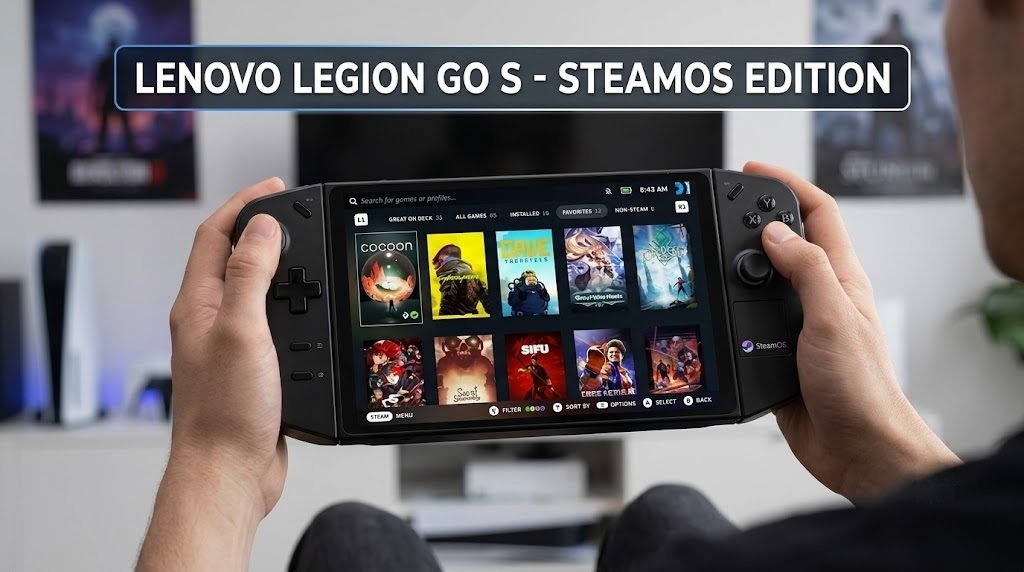
Despite being a larger device, its rounded chassis edges make it remarkably comfortable for long play sessions, while its vibrant high-resolution LCD proves that high-quality IPS displays can still rival OLED visuals in 2026.
Specs, Price and Drawbacks
According to the Lenovo product page, the SteamOS Legion Go S has an 8-inch 1920×1200 display at 120Hz and 500 nits. It supports up to 32GB of RAM and up to 1TB of storage, and it starts at 740g. TechRadar says the base model uses a Ryzen Z2 Go chip, while a premium version uses the Z1 Extreme.
TechRadar lists launch prices of $649.99 for the base model and $829.99 for the Z1 Extreme version. Check the chip before you buy, because the performance claims in this guide assume the faster Z1 Extreme.
Battery life is the biggest weakness. The 55.5Wh pack delivers about two and a half hours of gaming, according to TechRadar. The same review criticizes loud fans, non-detachable joysticks and a Steam-only library without workarounds. Lenovo’s UK page also lists the product as end of life, so confirm stock before you commit.
3. MSI Claw 8 EX AI Plus ($1,799) – Absolute Raw Performance
For enthusiasts who demand uncompromised power regardless of cost, the MSI Claw 8 EX AI Plus sits in a class of its own. Built around Intel’s Panther Lake architecture and the Intel Arc G3 Extreme chip, this behemoth handheld shatters previous processing ceilings.
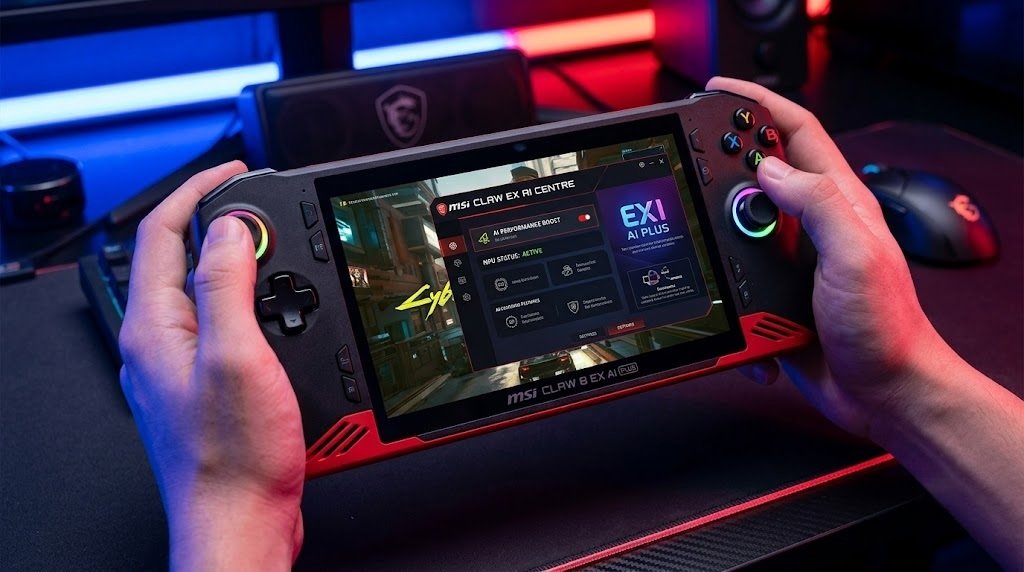
In head-to-head testing against AMD Z2 Extreme devices, the Intel Arc G3 Extreme chip delivers up to 55% faster frame rates in heavy titles like Crimson Desert and Cyberpunk 2077. However, at $1,799, its heavy chassis and steep price tag position it strictly as a luxury device for hardcore power users.
Specs, Price and Drawbacks
The MSI spec page lists an Intel Arc G3 Extreme processor with 14 cores, 32GB of LPDDR5x memory and a 1TB SSD. The 8-inch 1920×1200 screen supports 48-120Hz variable refresh. Two Thunderbolt 4 ports, Wi-Fi 7 and an 80Wh battery round out the package. It weighs 1.73 lbs.
HotHardware reports class-leading gaming performance and excellent battery life, along with a $1,799 MSRP. It also calls the weight significant compared with other handhelds. The same review notes that the screen lacks HDR, which stands out at this price. Tom’s Guide mentioned a $1,500 target price in its hands-on, so quoted prices have shifted. Verify the current figure before you buy.
In short, this is a device for enthusiasts with deep pockets. If you want a cheaper step down, the ROG Xbox Ally X gives up some speed but weighs less.
4. Base ASUS ROG Ally White ($599) – The Budget Champion
With hardware prices rising across the tech industry, the base white ASUS ROG Ally has emerged as the ultimate value winner. Retaining its accessible $599 price point, it offers a superior 1080p 120Hz display at a lower cost than many competing handhelds.
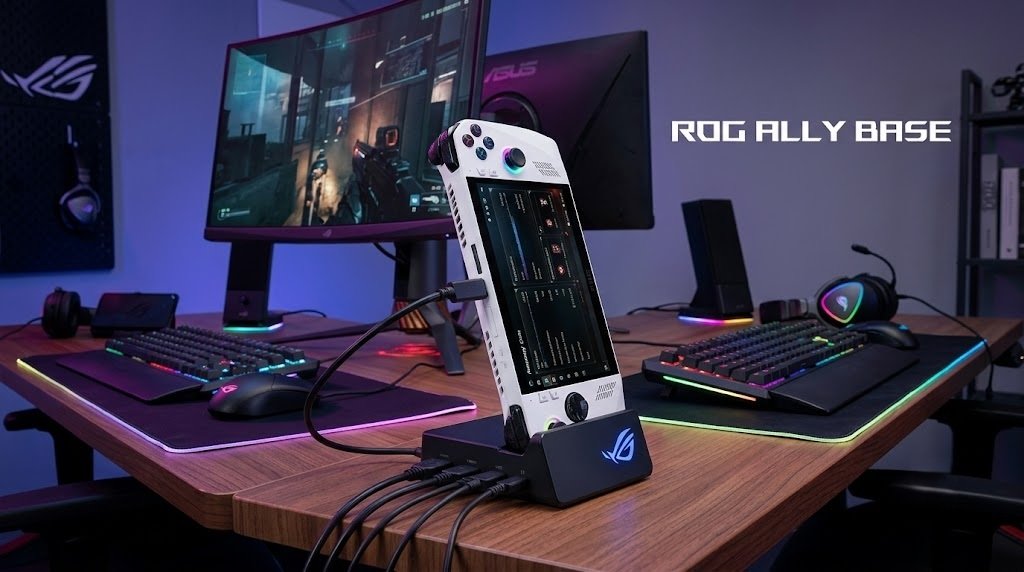
While its 16GB RAM configuration and lighter processor mean lower native frame rates in AAA titles (averaging 22 FPS in Cyberpunk 2077 at native 1080p High with FSR Quality), its lighter physical frame reduces wrist fatigue significantly. For tech-savvy users who install custom operating systems like Batocera or SteamOS, the base ROG Ally offers unbeatable bang-for-buck.
Specs, Price and Drawbacks
GSMArena lists the base ROG Ally with a Ryzen Z1 chip, 16GB of LPDDR5 memory and a 7-inch 1080p 120Hz IPS screen. The battery is 40Wh, and the weight is 608g. ASUS launched this configuration at $599, with the Z1 Extreme model at $699. We cannot confirm today’s street price, so check before you buy.
Expect short sessions. At launch, Tom’s Guide measured only 1 hour and 43 minutes of gaming on the Z1 Extreme model in a benchmark loop. The base Z1 has fewer cores than the Extreme version, according to GSMArena, so it falls further behind in heavy titles.
ASUS now also sells the newer ROG Xbox Ally with a Ryzen Z2 A chip and 16GB of LPDDR5, according to ASUS. Our Xbox Ally X review explains why we prefer the X model.
Windows 11 vs SteamOS: Choosing Your Handheld Software
Software shapes daily use as much as hardware does. The handhelds in this guide split into two camps, and each has trade-offs.
Windows 11 and the Xbox Full-Screen Experience
The ROG Xbox Ally X boots into a console-style Xbox interface. Tom’s Guide says it is “seriously slick to navigate” and that it removes background desktop processes. However, PC Games Hardware notes that it is not quite as seamless as SteamOS. Steam, Epic and GOG launchers also need a separate install.
The MSI Claw runs Windows 11 Home as a Copilot+ PC, according to MSI. You get full PC compatibility. You also get the usual Windows quirks, such as touch navigation in some launchers.
SteamOS on the Legion Go S
SteamOS suits players whose libraries live on Steam. Notebookcheck describes the Legion Go S as the first licensed non-Valve SteamOS handheld, with better efficiency than the Windows version. The trade-off is limited support for non-Steam apps without workarounds. As TechRadar puts it, this is a good choice for SteamOS diehards.
Which Should You Pick?
Choose Windows if you use Game Pass or several stores. Choose SteamOS if you value simplicity and battery efficiency.
Other Handhelds Worth Considering
Valve’s Steam Deck OLED remains the benchmark for value. It uses a Zen 2 and RDNA 2 chip with 16GB of RAM, a 7.4-inch 1280×800 OLED at 90Hz, a 50Wh battery and a 640g body. Notebookcheck says the Xbox Ally X significantly outperforms the original Steam Deck. The Deck still wins on screen quality and weight.
Looking ahead, ASUS lists a ROG Xbox Ally X20 (2026) on its ROG Ally lineup. It pairs the same Ryzen AI Z2 Extreme and 24GB of memory with a 7.4-inch OLED display. If the missing OLED panel bothers you, compare it with the model above before you buy.
5. Pros and Cons Summary
👍 What We Love
- AAA gaming performance is now truly portable (60 FPS in titles like BG3).
- Improved operating system interfaces (Xbox Full-Screen UI and native SteamOS options).
- Massive battery capacity upgrades (up to 80Wh in ROG Xbox Ally X).
- High-refresh 1080p displays with vibrant color accuracy.
👎 Drawbacks
- Flagship models carry premium price tags ($999 to $1,799).
- Standard Windows 11 can still freeze or require touchscreen navigation on non-optimized launchers.
- Battery life still averages 2 to 2.5 hours under maximum TDP loads.
6. Final Buying Advice: Which Handheld Should You Choose?
Selecting the right handheld gaming PC in 2026 comes down to your budget and software preference:
- Get the ROG Xbox Ally X ($999) if you want the best all-around experience, long battery life, and seamless Xbox Game Pass / Steam integration.
- Get the Lenovo Legion Go S if you love the console-like simplicity of SteamOS paired with high-resolution performance.
- Get the MSI Claw 8 EX AI Plus ($1,799) if you demand absolute peak FPS frame rates and cutting-edge Intel Arc graphics.
- Get the Base ROG Ally ($599) if you are on a budget and enjoy light modding or running custom OS builds.
Explore More Hardware Guides at Gearzon
Planning to dock your handheld for desk sessions? Our Dell Alienware AW3426DW review and ASUS TUF Gaming VG247Q1A review cover monitors worth pairing with one. If you’ll be gaming with a mouse and keyboard at the desk too, our gaming mouse buying guide walks through the same budget-tier logic we used here.