Best Keycap Materials in 2026: Metal, Ceramic, Wood, Jelly and Blank PBT Compared
Keycaps are the cheapest way to change how a keyboard looks, feels and sounds. Most sets are PBT or ABS plastic. In 2026, makers are moving past plastic with full metal, hollow aluminum, ceramic, jelly polycarbonate, real wood and thick blank PBT.
This guide compares those materials side by side. Weights, wall thickness and prices come from the Dygma Lab video and the maker pages named in each section. If you are still choosing a board, start with our guide on how much to spend on a mechanical keyboard.
How we built this guide
⚙️ Quick Specifications
👍 The Good
- Each material changes sound in a clear, audible way
- Wood is warm and grippy, unlike slick metal and ceramic
- Jelly keycaps give a ceramic-style look for under $30
- Blank PBT brings thick 1.8 mm walls and homing bumps
👎 The Bad
- Metal and ceramic are heavy, cold and slippery
- Most new materials skip shine-through legends
- Ceramic, jelly and wood sets lack F and J bumps
- Small-batch sets cost up to $140 and sell out
Why Keycap Material Changes So Much
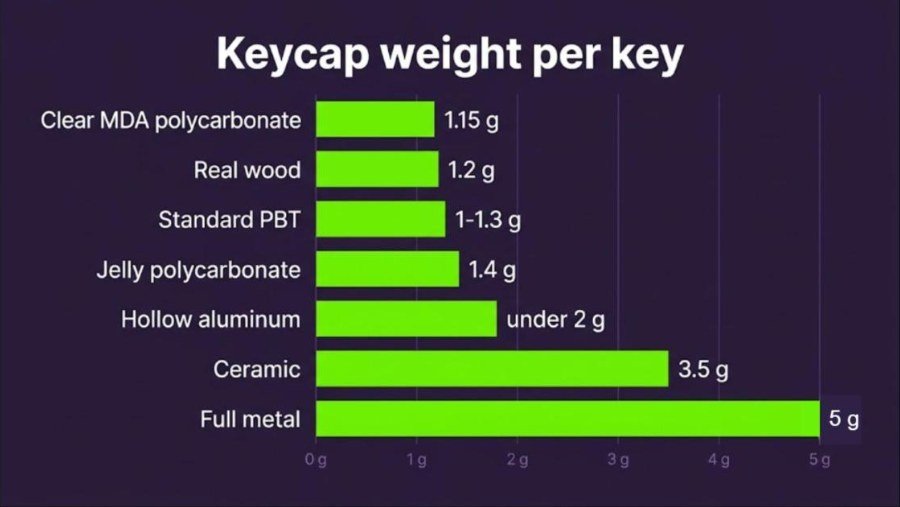
A standard PBT double-shot keycap weighs 1 to 1.3 g and has walls around 1.2 to 1.3 mm. That is the baseline in the Dygma Lab video. Every material below is measured against it.
Wooting’s help article explains the two common plastics. ABS is smooth and glossy, and it gets shiny with wear. PBT is slightly textured, resists grease and sounds softer and deeper. Read the full ABS vs PBT explainer from Wooting if you need a refresher.
Weight, wall thickness, stem fit and surface texture all shape the result. Heavy caps change switch feel. Thick walls change pitch. Slick surfaces change grip. Newer materials push those variables much further than plastic can.
Keycap Materials Compared at a Glance
The table puts the seven materials next to a standard PBT set. Weights and wall thickness follow the Dygma Lab video. Prices come from the maker pages, with the video’s figure where the page gives none.
| Material | Weight per key | Walls | Price | Feel | Shine-through | F/J bumps |
|---|---|---|---|---|---|---|
| Full metal low-profile | About 5 g | Not stated | $119 at Kickstarter launch (60% set) | Cold, slippery; brushed finish adds grip | No, laser-etched | Not stated |
| Hollow die-cast aluminum | Just under 2 g | Hollowed sides | $44.99 | Accent set with spacebar | Not stated | Not stated |
| Ceramic | 3.5 g | 1.9 mm | $140 | Cold, slick | No | No |
| Jelly polycarbonate | 1.4 g | 1.7 mm | $26.99 | Slippery, not cold | No, light glows around legends | No |
| Clear MDA polycarbonate | 1.15 g | 1.3 mm | About $30 | Slippery, gets greasy | Yes, strong glow | Yes |
| Real wood | 1.2 g | 1.8 mm | $98.90 | Warm, not slippery | No, engraved | No |
| Blank PBT | Not stated | 1.8 mm | $79 | Heavily textured | No, blank | Yes |
| Standard PBT double-shot | 1 to 1.3 g | 1.2 to 1.3 mm | Varies | Textured | Often yes | Yes |
The Dygma Lab video walks through every material in this guide with sound tests. It is the best way to hear the differences.
Video: Trending keycap materials of 2026 (Dygma Lab). Opinions in the video belong to the creator, so treat it as another point of view.
Metal Keycaps: Full Metal and Hollow Aluminum
Metal comes in two very different forms. One is a heavy, solid cap. The other is a light, hollowed accent set.
Full Metal Low-Profile Keycaps (Awekeys)
True metal keycaps are rare. Many sets only have a metal finish over plastic. Awekeys builds the whole cap from metal, stem included. Its Air page lists recycled cupronickel, a height 50% lower than conventional keycaps and six finishes: satin gold, satin silver, satin copper, titanium black, obsidian black and ivory white.
The stem is hard to make. It must fit the switch perfectly, so the video presenter says you need to press each cap firmly into place. A hand-brushed special edition adds grip and cuts glare.

Weight and Switch Feel
Each metal cap weighs about 5 g, against 1 to 1.3 g for PBT. A whole set weighs roughly 250 g, about half a pound. The video notes that switches feel lighter under heavy caps, so a light switch feels even lighter.
TechPowerUp reviewed an earlier full-size Awekeys set. It found the extra mass needs slightly more force to start a press. It also made bottoming out more likely and called the feel divisive. Heavy-handed typists may like it, while fast repeated taps suit it less.
Sound, Legends and Price
You might expect a metallic ring. The video says the sound is muted and deep, even next to PBT double-shot caps. You only hear a ping when two caps collide. TechPowerUp also found a deeper sound than stock PBT, with the higher-pitched resonances gone.
The legends are laser-etched, so they never wear out. They do not shine through, though. The caps are cold and slippery. Dygma quotes $119 for the smallest 60% set at the Kickstarter launch and expects higher regular prices. For the earlier full-size set, TechPowerUp listed a $299 MSRP and early-bird prices near $199 to $219.
Hollow Die-Cast Aluminum Keycaps (PSY Commu)
If you want metal without the price, PSY Commu sells hollow aluminum caps for about $45. The page lists $44.99. They are die-cast aluminum alloy with CNC machining, sandblasting and anodizing, in silver or metallic gray.
The hollowed sides are meant to let sound pass through. The idea is to give more direct switch sound and less cavity reverb. Each cap weighs just under 2 g, against about 1.3 g for PBT. The profile is OEM, so the set fits a regular keyboard.

This is an accent kit, not a full set. The page lists Esc, a 2.25U Enter and a 6.25U spacebar. The video notes the spacebar is included if your board is not ergonomic. Stock is limited, and the page showed a pre-order status when we checked, so confirm availability before you plan around it.

Ceramic Keycaps (Cerakey)
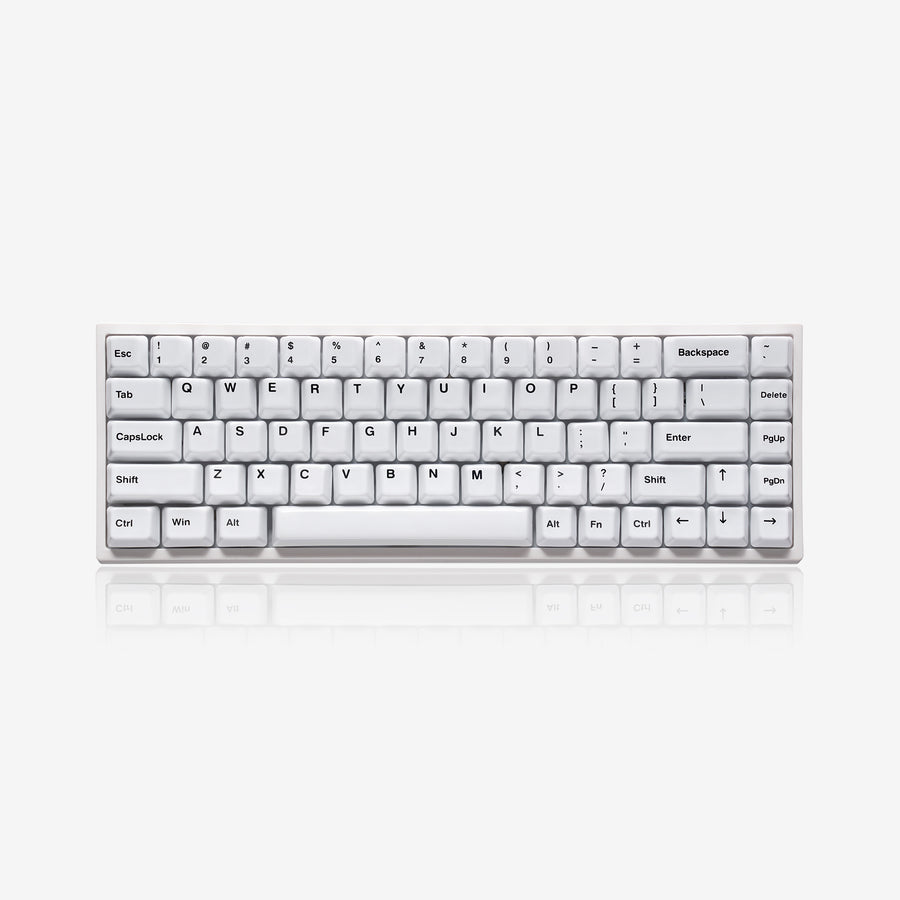
Ceramic has trended for a couple of years, and Dygma’s presenter loves how deep it sounds. The Cerakey full set V2 page lists industrial-grade alumina ceramic fired at about 1,140 to 1,280 degrees Celsius. The set has 114 keys in Cherry profile and costs $140.
Stem Redesign and Thick Walls
Early ceramic sets had ceramic stems that fitted switches poorly. Newer sets use a plastic stem, and the video says the fit is now perfect. The Gadgeteer’s review notes the plastic stem is glued inside the ceramic shell and works with Cherry MX switches and clones.
The walls are about 1.9 mm thick. That is far above the 1.2 to 1.3 mm of a normal cap, and it explains much of the deep sound. Reviewers describe it as thocky. Laptop Mag’s week-long test also praised the sound and the cool feel under the fingers.
Weight, Grip and Drawbacks
Each ceramic cap weighs 3.5 g. The Gadgeteer’s scale showed a handful of its caps weighing 35 g together, against 13 g for comparable plastic caps. The caps are glossy and slick, and the video presenter prefers more texture.
There are no homing bumps on F and J. There is no shine-through, even on sets with legends. Dark caps also show finger grease. The Gadgeteer adds that heavy force or a heavy falling object can break a cap. Cerakey offers a one-year replacement for faulty caps.
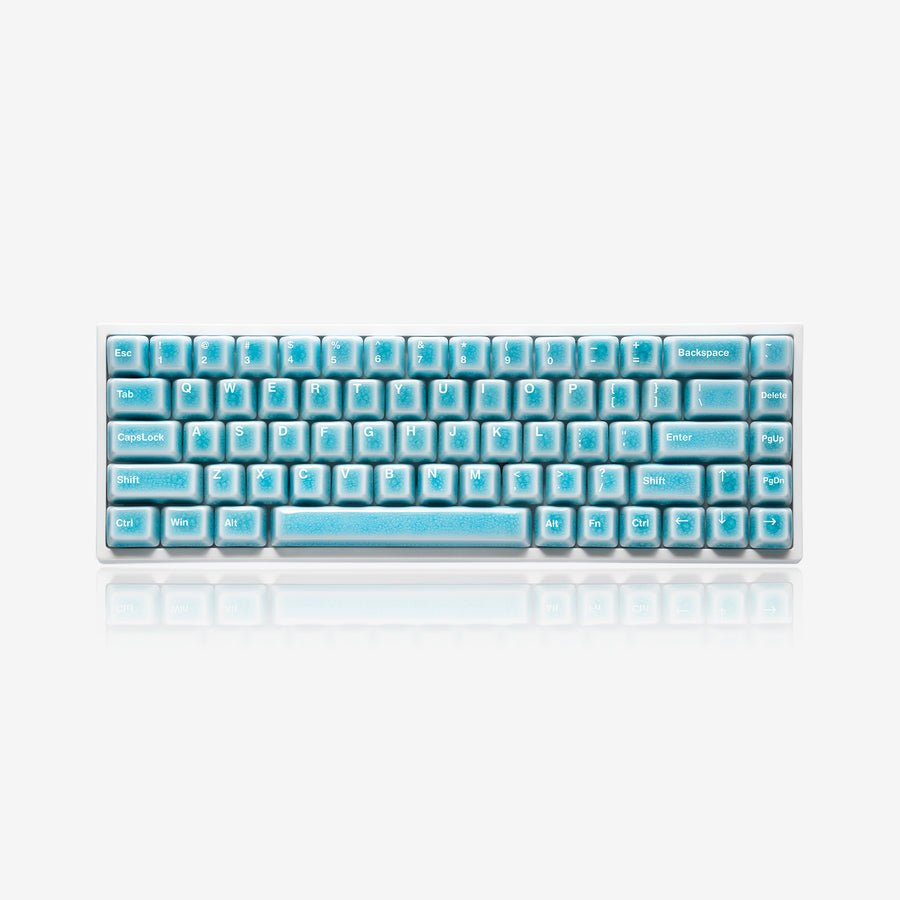
The set ships with a keycap puller and two sample switches, per the maker page. The Gadgeteer measured $126 to $144 per set depending on color in its 2024 review. The maker page lists $140 today, inside that band.
Jelly and Polycarbonate Keycaps (Womier)
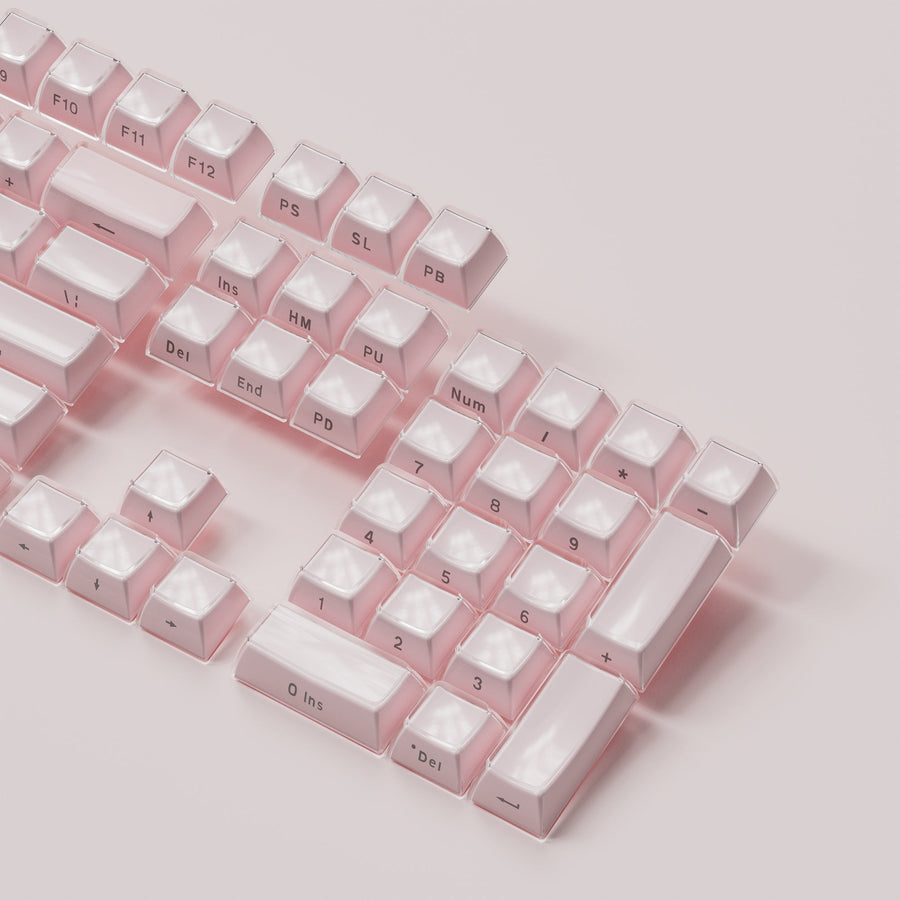
Jelly keycaps copy the glossy look of ceramic for a fraction of the price. Womier is the brand named in the video. Two designs matter here: the translucent Jello set and the fully clear Iceberg set.
Womier Jello
Jello caps use a clear polycarbonate shell over an opaque plastic core. The Womier page lists a polycarbonate top layer and ABS second layer, double-shot, in OEM profile with 113 keys. It costs $26.99, down from $42.99. The video rounds that to about $30.
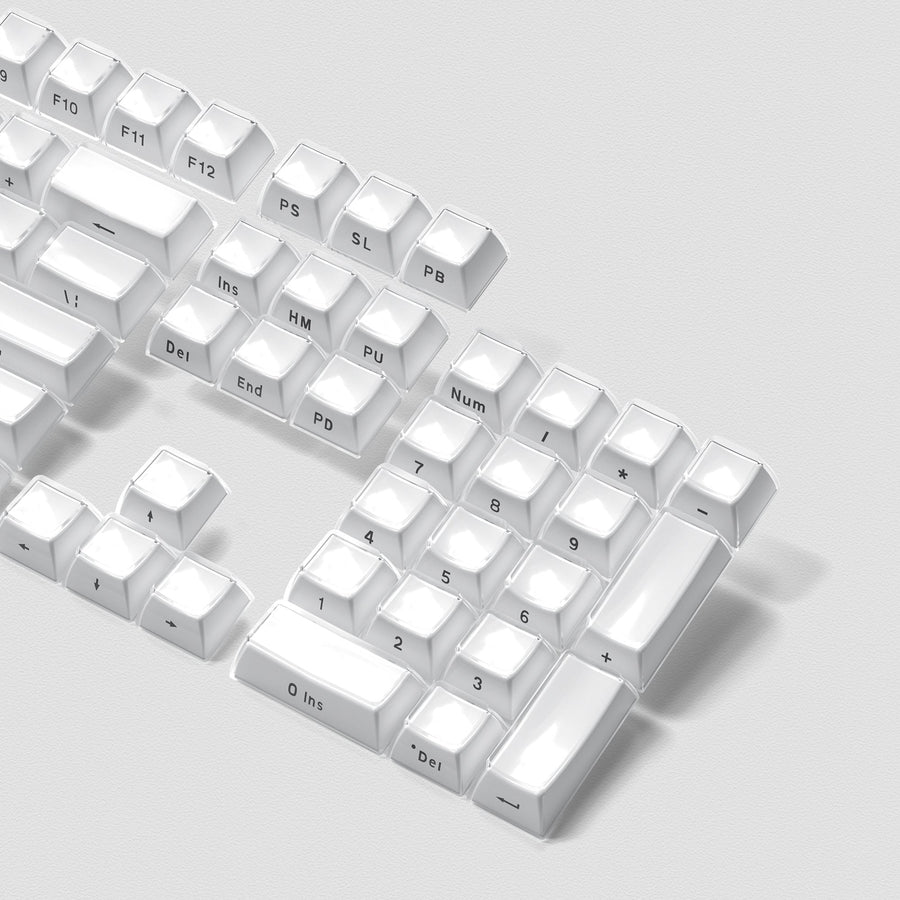
The legends are printed on the inner plastic, so light glows around them instead of through them. Each cap weighs 1.4 g, with 1.7 mm walls. That is much lighter than ceramic. The sound is not as deep as Cerakey, but the presenter does not dislike it.
The surface is slippery but not cold. There are no homing bumps. The side legends have a plain font and some alignment problems, so the presenter would choose a version without legends. With bright RGB, the light bleeds into the clear plastic and makes each cap look like it has eyes.
Want the jelly look?
Womier sells jelly-style keycaps on Amazon in several colors. The listing linked here is the White CK set in MDA profile, so check profile and layout first.
View Womier Jelly Keycaps on Amazon
Some links on this page may earn GearZon a small commission at no extra cost to you.
Womier Iceberg: Fully Clear MDA Polycarbonate
If you want full RGB glow, the video points to fully transparent MDA polycarbonate caps. Light shines through like crazy, and the presenter likes the look. The caps cost about $30 on Amazon.
They also feel cheap, according to the video. The legends are pad-printed, so you feel them and they will wear. Each cap weighs 1.15 g with 1.3 mm walls, and the surface gets greasy. On the plus side, F and J have bumps. Sound depends heavily on your switches.
Real Wood Keycaps (KPRepublic)
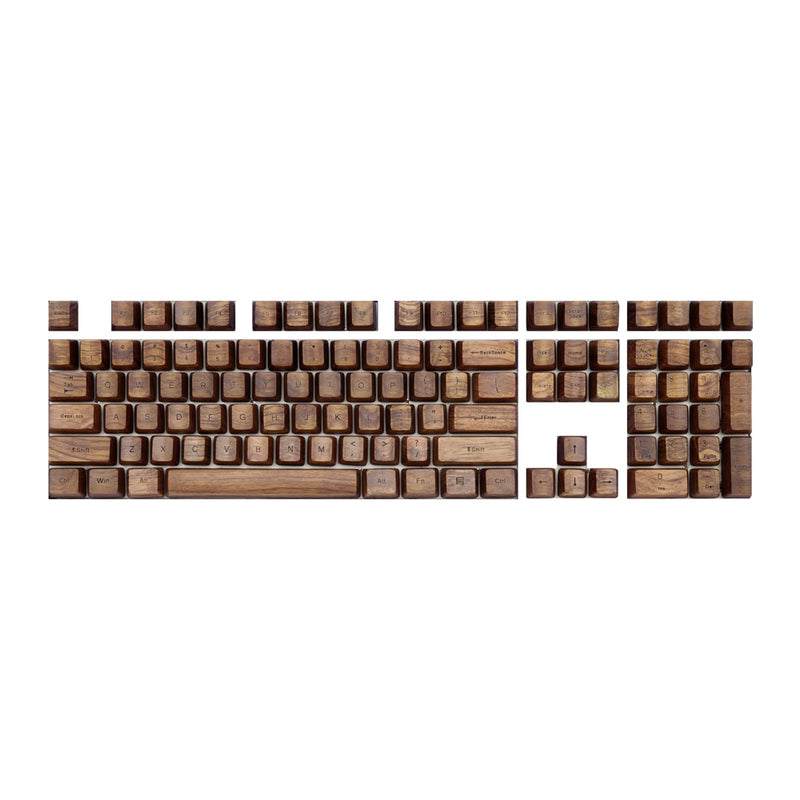
Wood is the opposite of slick ceramic. KPRepublic’s Loop 104 set uses real wood in walnut, rosewood or beech, with a plastic stem. The video says the caps feel warm and are not slippery at all.
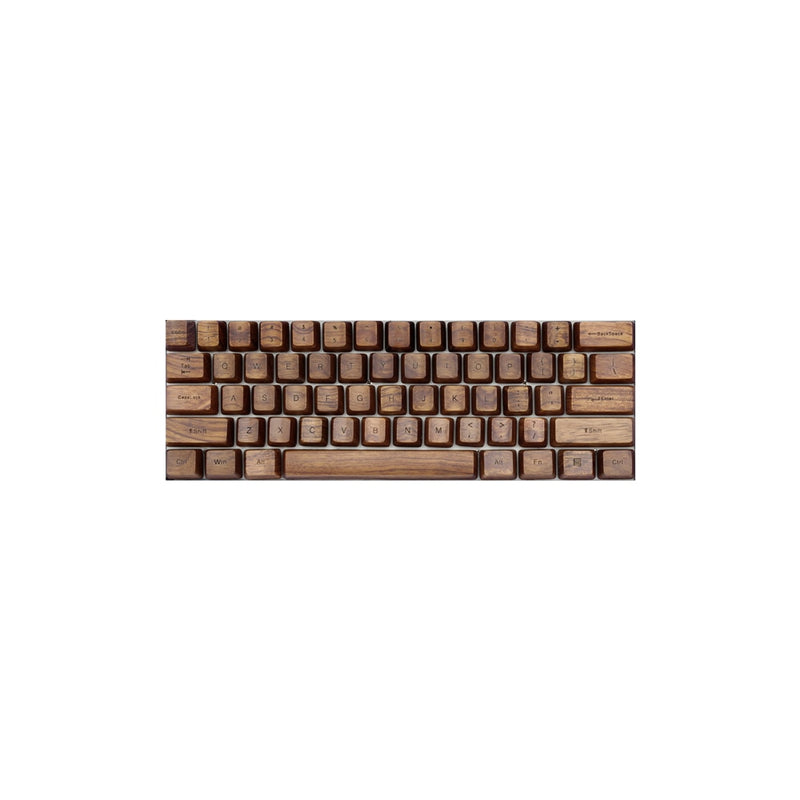
The sound is not loud. The presenter calls it warm and elegant. The walls are 1.8 mm thick, yet each cap weighs only about 1.2 g. The maker’s page, however, describes thick wood of around 1 mm, so treat the wall figure as approximate.
The legends are laser-engraved, so they do not shine through, but the engraving looks good. There are no bumps on F and J. Pricing is steep: the page lists $98.90 and the video says over $100 for a 60% set. The OEM profile fits most boards, and the page says it supports only the standard layout. As with any wood, keep it away from moisture.
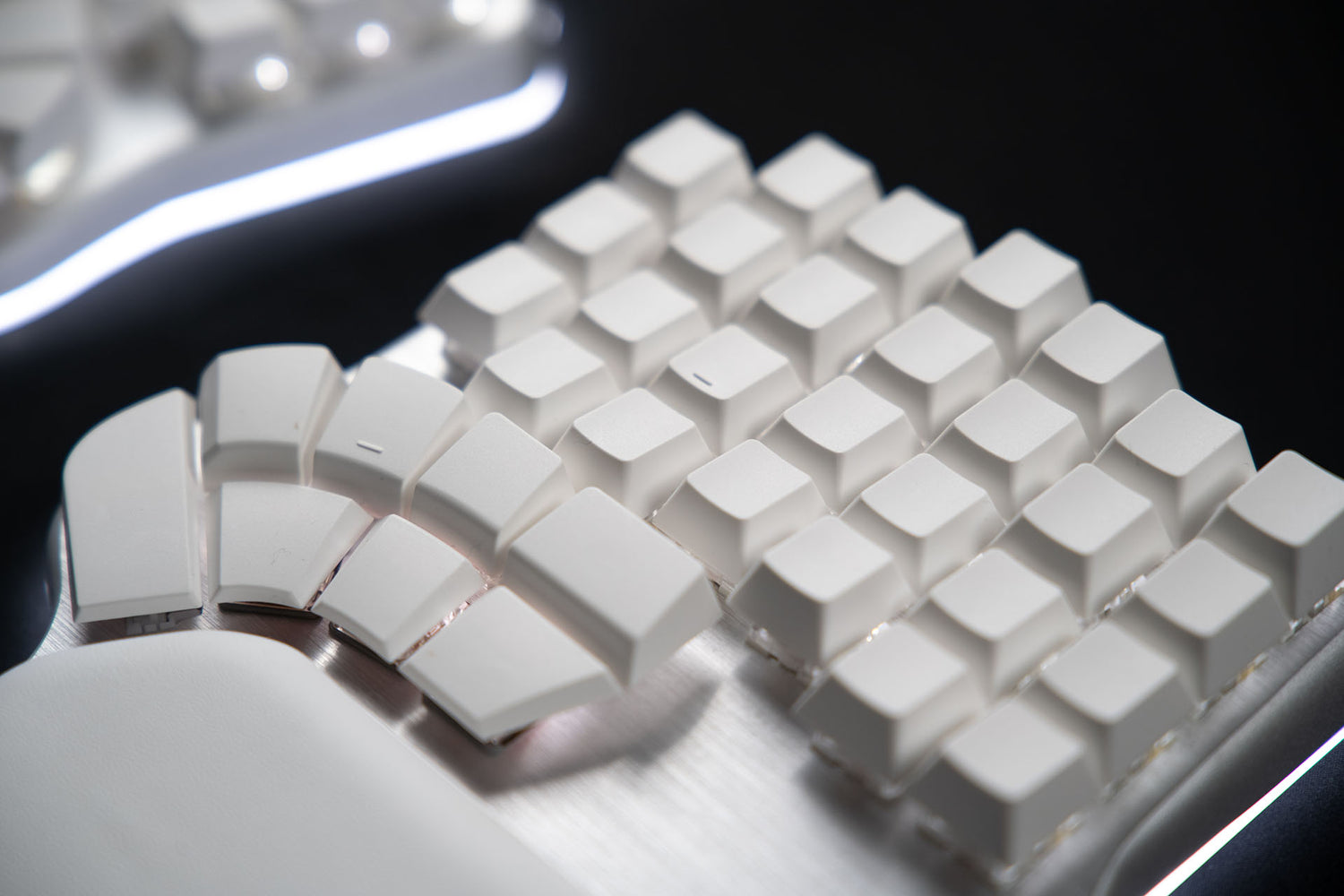
Blank PBT Keycaps (Dygma)
PBT is not new. It has shipped on keyboards since day one. The stealthy blank look is what feels fresh, and the presenter is in love with it. Dygma’s version is single-shot opaque PBT in Cherry profile.
The walls are 1.8 mm thick and the stem fits without wobble or rattle. That gives a clean sound the presenter calls thocky, but not too much. Blank caps do not shine through, yet they keep homing bumps. The surface is heavily textured, which suits fast typing and gaming.
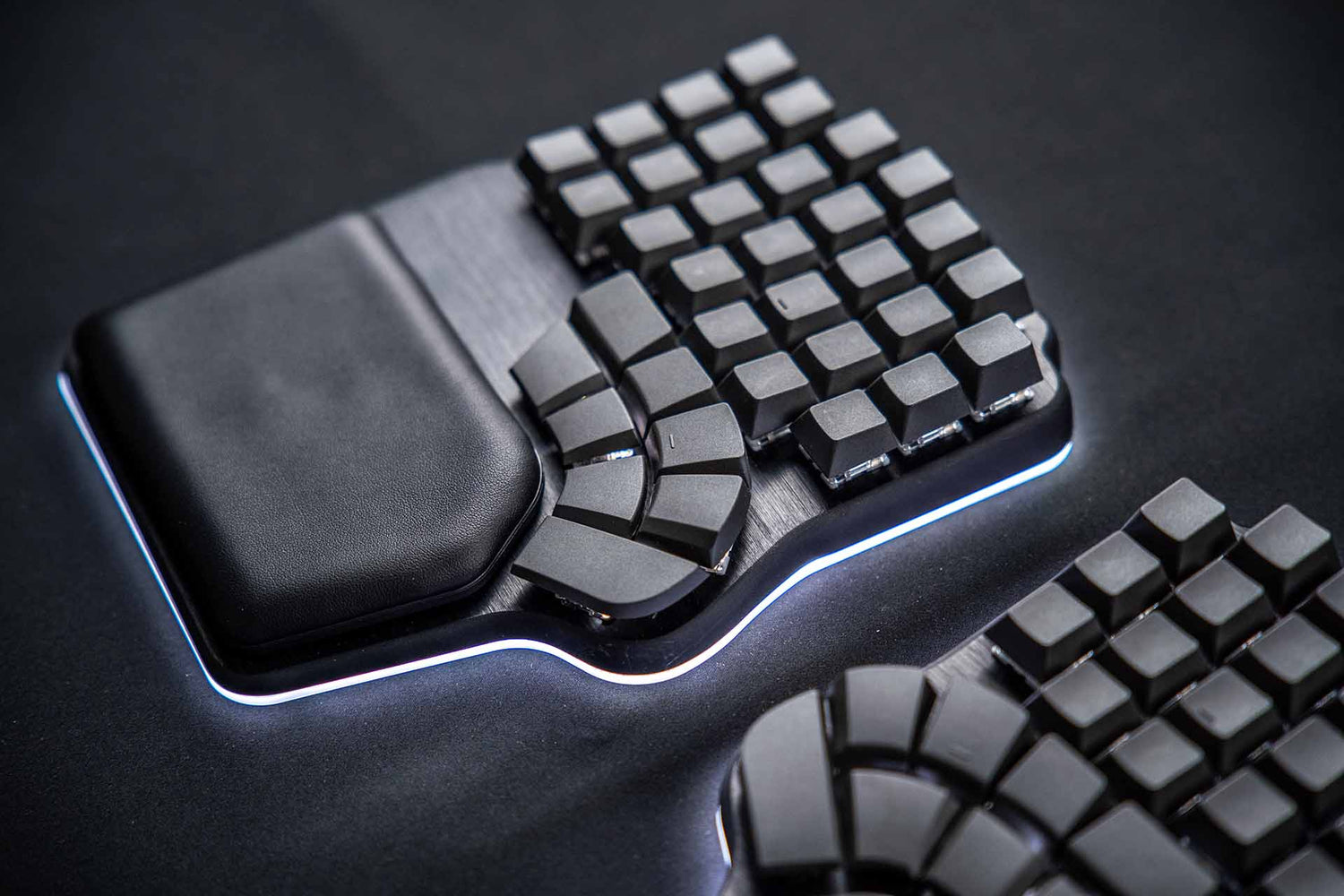
The set costs $79, with dye-sublimated legend versions also offered. Dygma lists a two-year warranty. One catch: the page lists the set for the Dygma Defy, so check compatibility before you buy for another board.
How Material Changes Sound, Feel and Typing
Weight and Switch Feel
Heavy caps make switches feel lighter, as the video explains for the 5 g metal set. Light jelly, wood and clear polycarbonate caps stay near PBT weight. They change feel less. Ceramic sits in between at 3.5 g.
Sound
Thick walls and tight stems drive pitch. Ceramic at 1.9 mm, wood at 1.8 mm and blank PBT at 1.8 mm all sound fuller than thin caps. Clear polycarbonate at 1.3 mm depends on the switch, as the video says. Hollow aluminum aims for the raw switch sound instead of cap reverb.
LumeKeebs offers a second voice. It compares PBT, ABS and ceramic caps by sound profile.
Video: PBT vs ABS vs Ceramic Keycaps (LumeKeebs). Opinions in the video belong to the creator, so treat it as another point of view.
Texture and Temperature
Metal and ceramic are cold and slippery. Jelly is slippery but not cold. Wood is warm and grippy. Blank PBT is heavily textured. If you game with fast, wide finger movements, grip may matter more than looks.
Legends and RGB
Only fully clear MDA polycarbonate gives a strong glow. Jelly glows around legends. Metal, ceramic, wood and blank PBT do not shine through. Ceramic, jelly and wood also lack homing bumps, so touch typists may need to learn the home row by feel.
Which Keycap Material Should You Choose?
| If you want | Choose | Why |
|---|---|---|
| Deep, muted sound | Ceramic or full metal | Heavy caps with thick or solid build give the deepest tone |
| Warm, grippy feel | Real wood | Warm to touch and not slippery |
| Ceramic look on a budget | Womier jelly | About $27 to $30 and much lighter |
| Bright RGB glow | Clear MDA polycarbonate | Light shines through the caps |
| Clean stealth look and bumps | Blank PBT | 1.8 mm walls with homing bumps |
| A few metal accents | Hollow aluminum | Under 2 g and about $45 |
Compatibility Checks Before You Buy
| Check | Why it matters |
|---|---|
| Stem type | Most sets use MX-style stems. TechPowerUp warns that switches with walls around the stem may not fit rigid metal stems. |
| Profile | OEM, Cherry and MDA differ in height. Awekeys Air caps are low-profile, so they need a low-profile board. |
| Layout | Womier Jello has 113 keys, Cerakey has 114, and KPRepublic supports the standard layout only. |
| Board support | Dygma lists its PBT set for the Dygma Defy, so confirm before buying for another board. |
| Care | Ceramic can break from a heavy impact. Wood prefers a dry desk. |
Need a keyboard to try these on? Browse our reviews of the Wobkey Rainy 75 Pro, IQUNIX EV63, AULA F99, Yunzii IF68, AULA AG75 Pro, MCHOSE Ace 75, Yunzii RT75 Pro and Logitech G PRO X TKL Rapid.
Building out the rest of your desk? See our picks for the best standing desk for gaming, the OLED gaming monitor comparison and the HyperX SoloCast review for a simple USB mic.
Ready to try a lighter ceramic-style cap?
Womier jelly keycaps are the budget route to the glossy look. Confirm your keyboard layout before ordering.
View Womier Jelly Keycaps on Amazon
Some links on this page may earn GearZon a small commission at no extra cost to you.
Bottom line: ceramic and full metal win on sound, wood wins on feel, jelly wins on price, and blank PBT wins on clean looks and grip. Match the material to how you type, then check stems, profile and layout before you buy.
Frequently Asked Questions
What are the best keycap materials for a mechanical keyboard?
It depends on what you want. Ceramic and full metal give the deepest sound, real wood feels warm and grippy, jelly polycarbonate gives a ceramic-style look for around $27 to $30, and thick blank PBT gives a clean, stealthy look with homing bumps.
Are ceramic keycaps worth around $140?
Ceramic keycaps are heavy at about 3.5 g each, with walls near 1.9 mm, and they sound deep. They are also cold, slippery and have no homing bumps or shine-through legends. If you value that sound and look, they can be worth it. If you want grip or RGB, look elsewhere.
Do metal keycaps sound metallic?
Not according to the Dygma Lab video. The full metal Awekeys caps sounded muted and deep, even next to PBT double-shot keycaps, with only an occasional ping when two caps collide.
Which keycap materials let RGB light shine through?
Fully transparent MDA polycarbonate keycaps let light shine strongly. Jelly keycaps glow around printed legends but do not shine through them. Metal, ceramic, real wood and blank PBT keycaps do not shine through.
Do heavier keycaps change how switches feel?
Yes. A 5 g metal keycap is far heavier than a 1 to 1.3 g PBT keycap, so a light switch can feel even lighter. Reviewers also report that extra mass can make bottoming out more likely.
Will these keycaps fit my keyboard?
Most use MX-style stems and fit Cherry MX switches and clones, but check profile and layout first. The Dygma blank PBT set is listed for the Dygma Defy, and Awekeys Air caps are low-profile, so they need a low-profile keyboard.